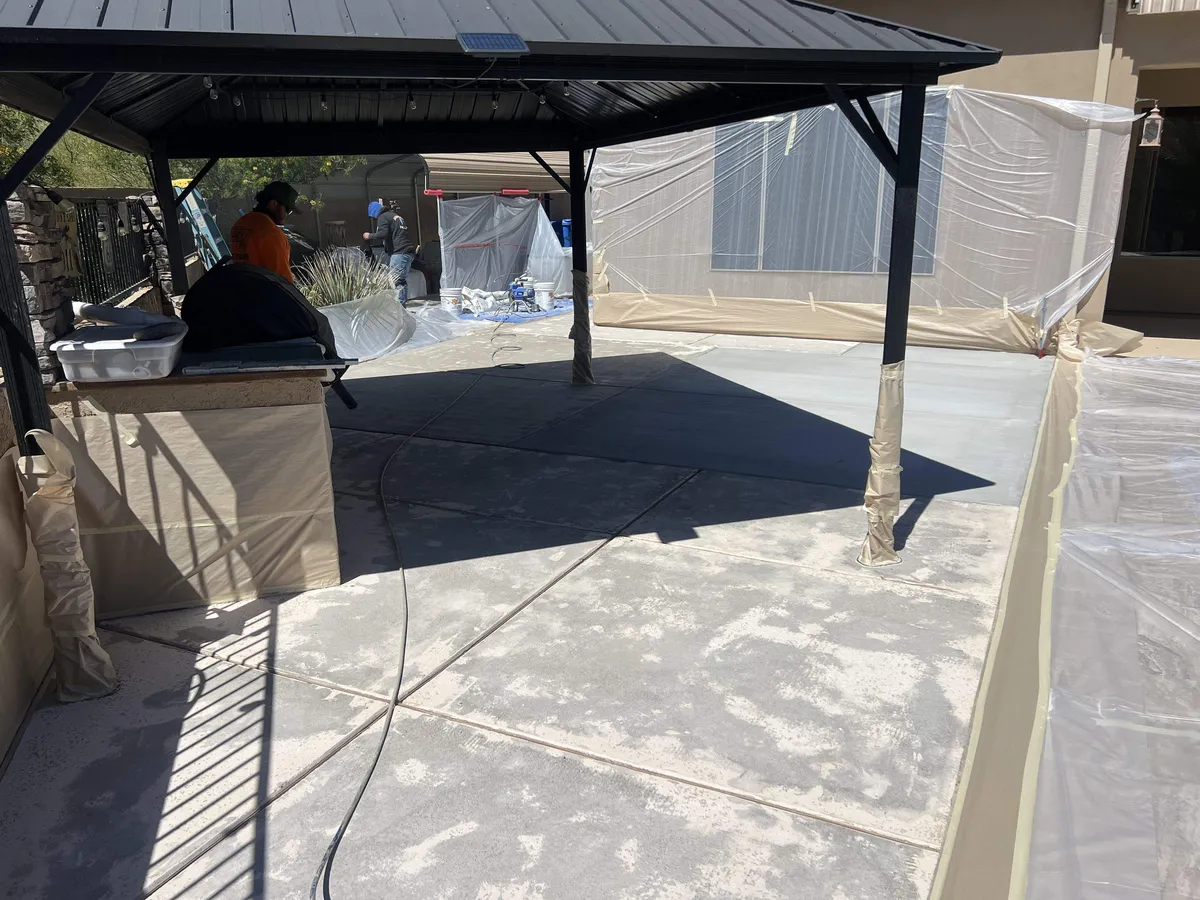
A lot of Arizona homeowners assume their cracked, faded pool deck has to be torn out. Most of the time, it doesn't. The concrete slab under a 20-year-old deck is usually fine. It's the surface that has failed. Knowing which situation you are in decides whether you pay for a coating or a tear-out, so here is how we actually make that call on an inspection (our process page walks through every step). If your deck is in the Phoenix area and you already know the slab is sound, our pool deck resurfacing in Phoenix page covers the coating systems, the warranty, and a free written quote.
Resurface vs. Replace at a Glance
| Resurfacing | Full Replacement | |
|---|---|---|
| Cost | Quoted per project: the lower-cost path | Usually much more: demolition, haul-off and a new pour come first |
| Time on site | 1–2 days | 1–2 weeks |
| Disruption | Low: no demolition | High: demo, haul-off, new pour |
| Finish options | Cool deck, stamped patterns, custom color | Any, but surface still needs a coating |
| Right when… | Slab is sound; surface is worn | Slab is failing structurally |
When Resurfacing Is the Right Call
Resurfacing wins whenever the problems live in the top layer: hairline or spider cracking, faded color, a chalky or peeling old coating (see why pool deck coatings peel), rough texture, or a surface that gets too hot to walk on. A coating system repairs that damage, seals it, and gives you a brand-new wear surface. In Phoenix that usually means a cool deck coating that, in a light color, can stay up to 30°F cooler than a dark surface in direct sun (source: LBNL Heat Island Group, measured on pavement), or a decorative stamped overlay (flagstone look).


It also wins on disruption. A typical resurfacing job is one to two days of work plus cure time. There is no jackhammering, no concrete trucks, and your landscaping stays intact.
When Replacement Is Genuinely Necessary
A coating cannot fix a failing slab. We recommend replacement (full or partial) when we see:
- Settling or heaving: sections that have sunk or lifted more than about an inch, usually from soil movement or water undermining the slab. Parts of the Valley also sit in mapped subsidence and earth-fissure areas, according to the Arizona Geological Survey.
- Deep structural cracks: wide cracks that go through the slab and keep moving seasonally, not just surface checking. Our guide to which cracks can be coated over includes a crack test you can do at home.
- Drainage built wrong: decks poured with slope toward the house or pool equipment that can only be corrected with new flatwork. Our monsoon drainage guide shows how to spot it.
- Crumbling concrete: spalling so advanced that there is no sound surface left to bond to.
Even then, replacement is often partial: repour the failed section, then resurface the whole deck so everything matches.
The Honest Middle Ground
Plenty of decks fall between the two: mostly sound, with a couple of problem areas. That is exactly what cool deck repair plus resurfacing is for: we cut out and patch the bad spots, then coat the entire deck so the repairs disappear. You get replacement-level results in the damaged areas at resurfacing prices.
Wondering what your deck's symptoms mean? Our guide to the 5 signs your pool deck needs resurfacing covers the most common ones, and our 2026 Phoenix cost guide explains what moves the price on every option. If you want a quick first read before anyone visits, our repair-or-resurface decision helper sorts a deck by age, symptoms and sun.
Why Replacement Costs So Much More
We don't publish prices, because every deck is quoted from the actual surface. We can still show you where the money goes. A resurfacing quote is mostly prep, crack repair and the coating itself. A replacement carries all of this before the deck gets any finish:
- Breaking out the old slab. Concrete next to a pool usually comes out with jackhammers and small machines, because heavy equipment can't work close to the coping and pool shell without risking damage.
- Haul-off. Every piece of broken concrete is carried out, usually through a side gate, and trucked away.
- Base and forms. The ground under the old slab is regraded and compacted, and forms are set so the new deck slopes away from the house and the pool.
- The pour. New concrete, placed and finished in one go.
- Waiting for it to cure. Most coatings want a cured slab. The Mortex instructions for Kool Deck on existing concrete, for example, call for clean, sound concrete that is preferably 28 days old.
- A finish anyway. Bare concrete is hot and plain, so most replaced decks get a coating on top. That is the same step a resurfacing job ends with.
Then come the costs that never show up as a line item: irrigation lines and plants along the deck edge, a pool fence or gate that may have to come down and go back up, and several weeks of your backyard being a work site. That is why we only recommend replacement where the slab itself has failed.
Phoenix Conditions That Tip the Decision
Valley decks wear out in their own way. Four local conditions come up on almost every inspection we do.
Heat and sun
Phoenix averages 111 days a year at or above 100°F, from an average first 100°F day of May 2 to a last one of October 5 (NWS Phoenix, 1991–2020). Years of UV and daily heat cycling wear out the top layer: the color fades, the coating goes chalky, and the texture flattens. That is surface damage, and it is exactly what resurfacing fixes. The same heat makes a summer tear-out harder, because new concrete poured in extreme heat needs extra care to finish and cure well.
Monsoon water
Phoenix only gets about 7.2 inches of rain in an average year (NWS Phoenix 1991–2020 normals), but the summer rain arrives in short, heavy storms. The official monsoon season runs June 15 to September 30, and the National Weather Service in Phoenix notes that in some areas more than half of the year's rain falls during the monsoon. A deck that slopes toward the house or holds a puddle shows it then. A coating follows the slab it sits on, so it can't fix slope. If water runs the wrong way, the fix is concrete work or added drainage, not a new surface.
Ground movement
Parts of the Valley sit in mapped land-subsidence and earth-fissure areas, according to the Arizona Geological Survey. Most deck cracks we see have nothing to do with that. But a crack that keeps opening, or a section that keeps dropping, is a slab problem, and a coating will crack right along with it.
Pool water and salt
Saltwater pools add one more surface problem: salt left behind as splash-out evaporates can scale the top of the concrete. Scaling is a surface defect, so it is usually resurfaceable once the damaged layer is removed. Our saltwater pool deck guide covers how to spot it.
A 15-Minute Check Before Anyone Quotes
You can sort most decks into the right column yourself. Take photos as you go; they help at the estimate.
- Look for steps. Lay a straightedge or long level across the widest cracks. If one side sits higher than the other, or a section has dropped away from the coping, note it.
- Tap the coating. Drag a screwdriver handle or a set of keys across the deck. A hollow, papery sound means the coating has let go of the slab. A solid knock means it is still bonded.
- Track the big cracks. Photograph the widest ones next to a coin for scale, then again a few months later. A crack that grows is moving. Our cracked deck guide has a fuller crack test.
- Run a hose for five minutes. Water should leave the deck toward a drain or the yard, never toward the house or the pool equipment.
- Check the edges. Crumbling at expansion joints or along the coping, rust stains, or exposed stone in the concrete tell us how deep the damage goes.
If everything on that list comes back as surface-only, you are looking at resurfacing. If two or more items point to movement or drainage, plan on at least a partial repour before any coating goes down.
Frequently asked questions
Can every pool deck be resurfaced?
Most can. If the concrete slab underneath is structurally sound, a new coating system can go over it after crack repair and prep. Decks with severe settling, heaving, or large structural cracks may need partial or full replacement.
How can I tell if my pool deck slab is structurally sound?
Look for movement, not just cracks. Hairline and spider cracks in a level deck are surface problems. Signs of a slab problem are sections that have sunk or lifted more than about an inch, wide cracks that run through the slab and grow each season, edges that rock underfoot, and slope that sends water toward the house. A free inspection will tell you which you have before anyone quotes a coating.
How long does a resurfaced pool deck last?
It depends on the system: a cool deck coating typically lasts 10–12 years (5–7 in harsh sun and water exposure), stamped overlay 10–15 years, and stamped concrete 12–15 years, especially when resealed on schedule.
How long does resurfacing take compared with replacement?
Resurfacing is usually 1–2 days of work plus a 3–7 day cure, with light foot traffic after 24–48 hours. Replacement means demolition, haul-off, forming, a new pour, and cure time before the new concrete can be coated, so plan on 1–2 weeks or more.
How much do I save by resurfacing instead of replacing?
Usually a lot, but we will not put a percentage on it without seeing the deck, because no published source backs a single ratio. Resurfacing skips the demolition, haul-off, base prep, forming and new pour that a replacement needs, and those steps are most of what a tear-out costs. If part of your slab is borderline, the estimate says which sections need concrete work first.
Does resurfacing fix a pool deck that drains toward the house?
No. A coating follows the slope of the slab under it, so water runs the same way after resurfacing as before. A low spot that holds water, or a deck that slopes toward the house, needs concrete work or added drainage first. Once the water goes the right way, the whole deck can be resurfaced so the repaired areas match.
Can you resurface a deck after replacing only part of it?
Yes, and it is often the best answer. The failed section is broken out and repoured, the new concrete is given time to cure, and then the whole deck is coated so old and new concrete match. How long the new section needs depends on the system; Mortex’s instructions for Kool Deck on existing concrete, for example, call for concrete that is preferably 28 days old.
The fastest way to know which side of the line your deck is on is a free inspection. Master Pool Decks inspects and quotes for free. Call (623) 521-1096 and we will give you a straight answer, even if that answer is "you don't need us yet."