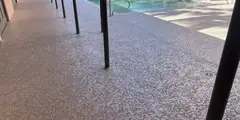
Pool Deck Resurfacing
New surface, same slab: crack and spall repair, prep, then the system that fits your deck. Valley-wide, with a page for every city we work in.
Beat the heat with cool, beautiful surfaces.
Locally owned. Free written quotes. 2-year warranty.
Master Pool Decks resurfaces existing concrete pool decks across Phoenix and the Valley. We repair cracks and spalling first, then apply a cool deck coating, stamped or flagstone overlay; a light coating finish can run up to 30°F cooler than bare concrete in the sun. Most decks take 1–2 days on site plus a 3–7 day cure. Insured, with a 2-year written workmanship warranty and a free written estimate.
★★★★★ 5.0 Google Rating · Insured & Warrantied · 2-Year Workmanship Warranty
The finishes we put down on Phoenix Valley pool decks. Each one has its own page with photos and details.
New surface, same slab: crack and spall repair, prep, then the system that fits your deck. Valley-wide, with a page for every city we work in.
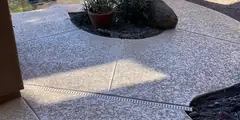
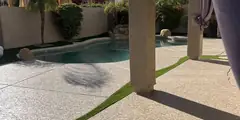
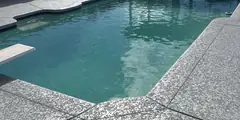
The classic Phoenix pool deck finish: crack repair, then a knockdown texture or lace texture that can run up to 30°F cooler than bare concrete in the sun.
For an existing Kool Deck or deck that is sound but tired: cracks routed and filled, spalls patched, hollow spots cut out, then a fresh coat.
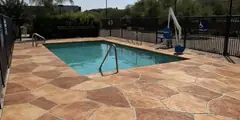
Stone, slate and tile textures pressed into a concrete surface around the pool, sealed for Arizona sun.
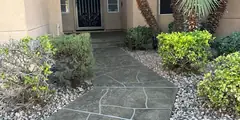
A flagstone, brick or tile look over your existing slab: an overlay with the stone pattern hand-detailed on site, so there is no tear-out.
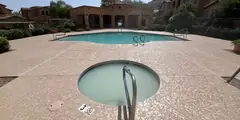
Pool deck resurfacing for apartments, HOAs, hotels and community pools across the Valley, phased in sections so part of the pool area stays open.
Inspection, crack repair, prep, picking the system that fits your deck, and cure times, laid out step by step for a Phoenix deck.
Pool deck resurfacing puts a new surface on concrete that is still sound. Under most 15- and 20-year-old Phoenix decks the slab is fine; it’s the top layer that has given up after years of sun, pool chemicals and monsoon water. That top layer is what a coating replaces.
Those are slab problems. A coating over a moving slab cracks again, usually by the second summer. When we see it at the estimate we say so, and the usual answer is to repour the failed section and then resurface the whole deck so it matches. Our resurface-or-replace guide walks through how we make that call, and the signs your pool deck needs resurfacing covers what to look for before you call anyone.
Four systems cover almost every pool deck in the Valley. We install the first three; Genuine Kool Deck is the original Mortex product, which we explain at the estimate but don’t install, because it only goes on bare, sound concrete. Here is how they compare on what Phoenix homeowners actually ask about. Heat is relative: whatever the system, a lighter color runs cooler than a darker one.
| System | Look | Barefoot heat | Wet traction | Typical life in AZ | Best for |
|---|---|---|---|---|---|
| Cool deck coating (knockdown or lace) | Speckled lace texture in any color | Coolest of the four in a light color | Good; texture depth is adjustable | 10–12 years (5–7 in harsh exposure) | Most residential decks, including recoats over old coating |
| Flagstone coating (stamped coating) | Hand-detailed flagstone, brick or tile pattern | Cool in light tones; darker grout lines run warmer | Good with a textured topcoat | 10–15 years | A stone look on the slab you already have |
| Stamped concrete | Stone, slate or tile impressions | Depends on color and sealer; dark colors run hot | Depends on the texture and sealer | 12–15 years | Deep texture and a heavier-duty surface |
| Genuine Kool Deck (Mortex) | The original splatter-and-trowel texture | Made for pool decks; cool in its standard light colors | Good | Depends on the slab and upkeep | Bare, sound concrete only; existing coatings must be stripped first |
Kool Deck note: genuine Keystone Kool Deck needs bare, sound concrete (see Mortex’s instructions for existing concrete), so a deck that is already coated usually gets a coating system instead. Cool deck repair on an old Kool Deck starts with what is still bonded.
Looking past coatings? Travertine and pavers cost a multiple of a coating and are a different job; we compare them in cool deck vs travertine and cool deck vs pavers. For brand questions, see cool deck coating vs SUNDEK, and for the garage-style flake coatings some companies put on pool decks, cool deck coating vs polyaspartic.
The figure you’ll see from us is up to 30°F cooler than bare concrete in the sun, and the “up to” matters. Surface temperature follows reflectance: in an infrared comparison from Lawrence Berkeley National Laboratory’s Heat Island Group, a light pavement segment measured about 30°F cooler than a dark one. A light deck works on the same principle. Choose a darker color and the gap shrinks.
Traction comes from texture. A knockdown or lace finish gives wet, bare feet something to grip, and it can be sprayed fuller around the water and tighter where furniture sits. Smooth, glossy sealed finishes look sharp but get slick when wet, so we don’t recommend them at the pool edge.
A properly prepared cool deck coating typically lasts 10–12 years in the Valley, or 5–7 under harsh exposure: full afternoon sun, heavy chlorine or salt splash, sprinklers hitting the surface. Stamped concrete runs 12–15 years and flagstone coating 10–15. To stay at the long end, rinse the deck instead of pressure-washing it at close range, keep sprinklers and planter drainage off it, wipe up spilled pool chemicals, and recoat when wear shows instead of waiting for bare concrete. More in how long cool deck lasts in Arizona.
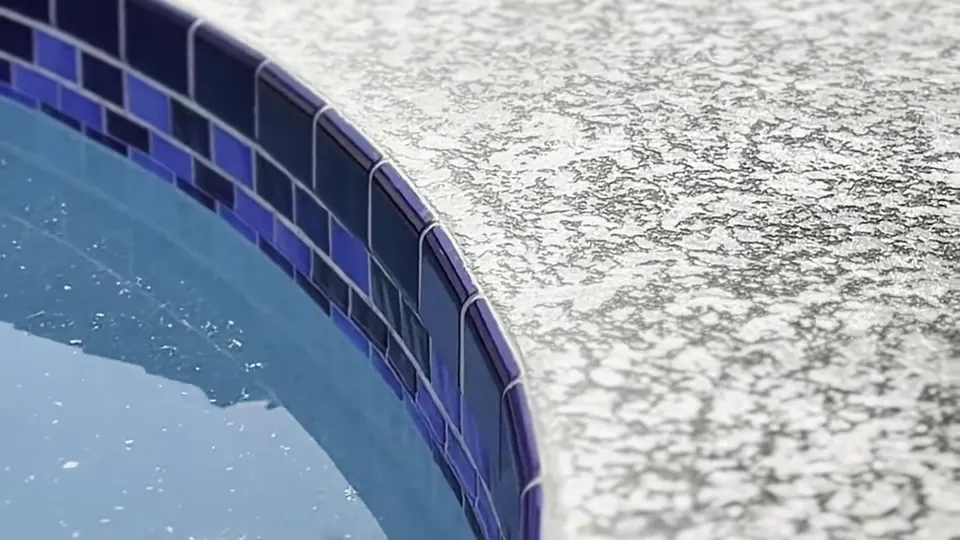
Most failed pool deck coatings in Phoenix failed because they were stuck to something that wasn’t solid. Whoever you hire, the scope should include these steps, in this order:
Then the cure: light foot traffic after 24–48 hours; furniture, grills, pets and pool service after 3–7 days, longer in cool or humid weather. Stay out of the pool while the deck cures, since there’s no dry path around it. Our process page covers each step, including how we protect the pool, and the step-by-step resurfacing process goes deeper on matching a system to your deck.
We don’t publish prices, because two decks the same size can be very different jobs. Every deck is quoted per project from the actual surface, and the estimate is free and in writing. What moves the number:
The written estimate lists the surface area, the system, your color, every repair we’ll make before coating, the crew days and cure window, and the 2-year warranty language. For a full breakdown of what drives price, read our guide to pool deck resurfacing cost in Phoenix.
Real projects from customers across Arizona
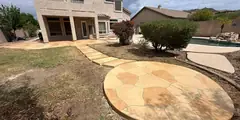
Cracks ran across this whole deck. Every crack was routed and filled, the drainage channels were kept open, and the deck was recoated in a charcoal lace texture, a finish that hides future hairlines better than a flat one.
The cracks were the job. Routing and filling them is slower than coating over them, and it’s why the old cracks don’t show back through by the second summer.
See the full case study and four more projects →See the quality and craftsmanship in our completed projects
A quick behind-the-scenes look at what makes our work last in the Arizona heat.
This 55-second clip walks a finished flagstone coating pool deck at an Arizona apartment community, with close-ups of the stone pattern being hand-detailed. Same prep-first approach as a backyard deck, just a bigger one.
Based in Avondale, working the whole Valley. See photos of our work, then open your city for local details and its own quote form.
In Phoenix that means every part of town: Ahwatukee, Arcadia and Biltmore, North Phoenix from Moon Valley to Desert Ridge and Norterra, Laveen, and Central Phoenix around Encanto. If you need more than the pool deck, see all our Phoenix services. Outside Phoenix we work from the West Valley to the East Valley and up to Cave Creek and Fountain Hills.
We’re a locally owned pool deck company based in Avondale, not a franchise. When you call about your project, you speak with us directly, from the estimate to the final walkthrough. Pool decks are the core of what we do: coatings and overlays built for 115-degree slabs, hard UV and monsoon water.
More on vetting bids in how to choose a pool deck contractor in Phoenix. Managing an HOA, apartment or hotel pool? See commercial and HOA pool deck resurfacing.
It depends on the deck, so we quote per project from the actual surface, and the estimate is free and in writing. Square footage, how much failing coating has to come off, how many cracks and spalls need repair, steps and coping, access, and the system you pick all move the number. Our pool deck resurfacing cost guide for Phoenix walks through each factor.
Most residential decks take 1–2 days of work on site: prep and repairs first, then texture and color once the repairs have set. Bigger decks, heavy crack repair or stamped work can add a day. You can walk on it lightly after 24–48 hours; furniture, grills and pets go back after a 3–7 day cure.
A properly prepared cool deck coating typically lasts 10–12 years in the Valley, or 5–7 years in harsh conditions. Stamped concrete runs 12–15 years and flagstone coating 10–15. Prep decides most of that: a coating that fails early almost always failed because of what was underneath it, which is why our 2-year workmanship warranty covers the first two summers.
A light cool deck coating can run up to 30°F cooler than bare concrete in direct sun. The “up to” matters: color and texture decide how much. Surface temperature follows reflectance, and Lawrence Berkeley National Laboratory’s Heat Island Group shows the same effect on pavement, where a light segment measured about 30°F cooler than a dark one.
Usually, yes. Hairline and spider cracks are surface problems: we open them, fill them with a flexible compound and feather them so they don’t show back through. A crack that keeps getting wider, has one side higher than the other, or runs along a section that has sunk or lifted means the slab is moving. A coating won’t stop that, so we tell you at the estimate and usually recommend replacing that section first.
Genuine Keystone Kool Deck from Mortex can go on existing concrete, but only bare, sound concrete: every existing coating has to be stripped first, per Mortex’s instructions for existing concrete. It won’t bond over a coating or painted surface, so a deck that’s already coated usually gets a cool deck coating system instead.
Not with the right texture. A knockdown or lace finish gives wet, bare feet something to grip, and the texture can be sprayed fuller around the water and tighter where furniture sits. Smooth, glossy sealed finishes look sharp but get slick when wet, so we don’t recommend them at the pool edge.
Usually not. We’re resurfacing the deck, not the pool shell, so the pool stays full. Before anything is sprayed we mask and protect the coping, the tile line, the water’s edge and the equipment pad. Plan on staying out of the pool while the deck cures, since there’s no dry path around it. Our process page covers the details.
October–November and March–early May are the easiest windows: mild temperatures, low rain risk and a predictable cure. We work year-round, though. In summer we start early in the morning, and in monsoon season we book application days against the forecast. Our guide to the best time to resurface a pool deck in Phoenix covers each season.
Yes. We resurface community pool decks for HOAs, apartment communities and hotels. We phase the deck in sections so part of the pool area stays open, barricade and sign the work zones, and keep each section closed until it has fully cured. See commercial and HOA pool decks.
More answers on our full FAQ page.
Every photo on this site is our own completed work across the Phoenix Valley. Let's discuss your pool deck transformation — free quote within 24 hours.
Get Your Free Quote
Professional assessment within 24 hours