Flagstone Coating Pool Decks Phoenix | Master Pool Decks

Flagstone Coating in Phoenix

A hand-cut stone pattern troweled over the concrete you already have — no demolition, 10–15 years of finish

Get Your Free Quote

What Flagstone Coating Is, and Who It Suits

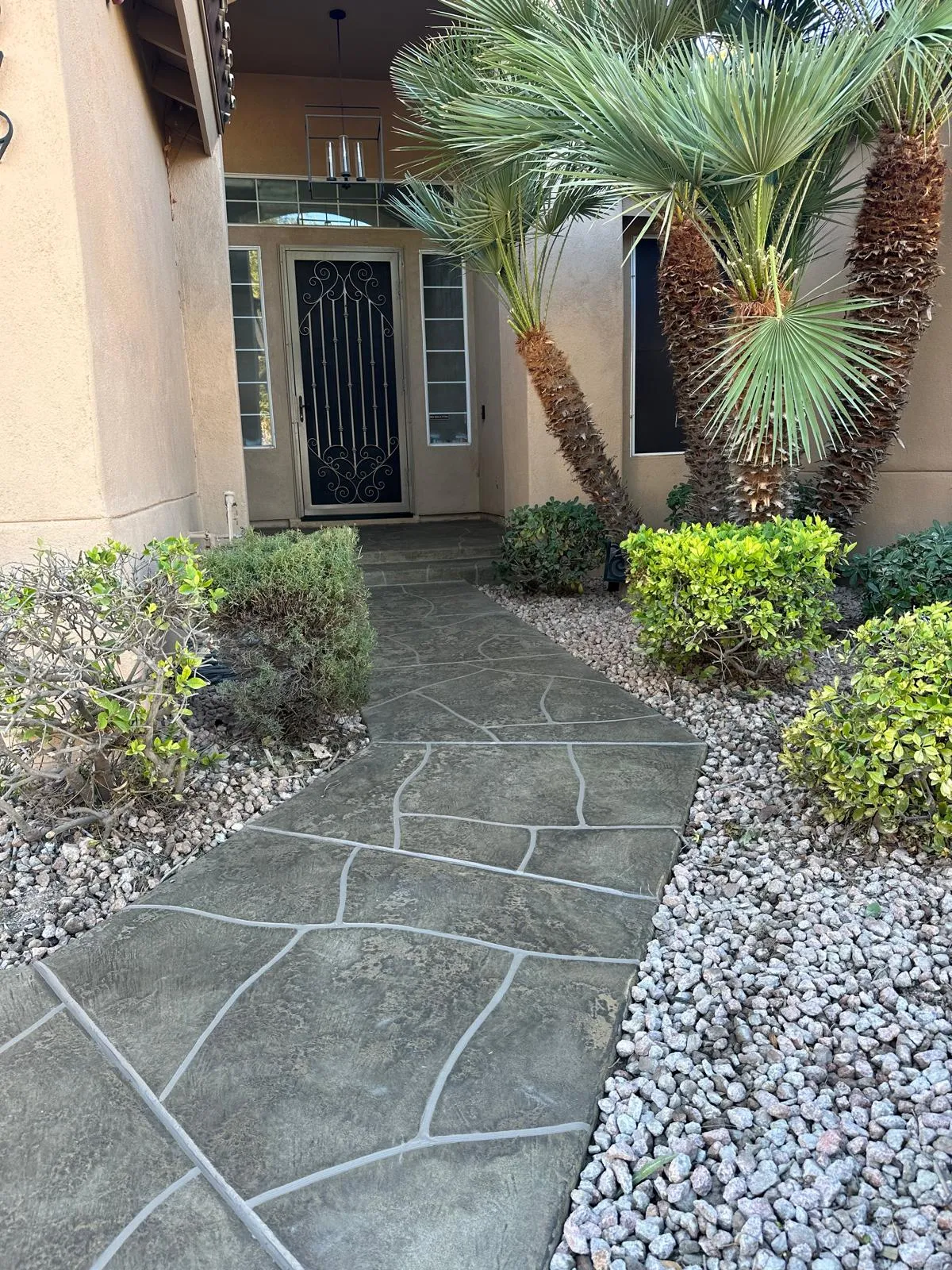
Flagstone coating is a hand-cut stone pattern built out of a thin overlay on top of the concrete you already have. We trowel the base on, cut the joints in by hand while it is workable, then color and seal it. It suits a homeowner who wants a laid-stone look without demolition, without raising the deck at doorways and coping, and without paying for a cementitious stamped overlay. If a laid-stone look is not the goal, there are simpler ways to resurface your pool deck with a sprayed texture coating, and they cost less.

The short version. Flagstone coating lasts 10–15 years on a properly prepared Phoenix deck. Application is 1–2 days of work; light foot traffic returns at 24–48 hours, and furniture and pool service wait for the 3–7 day cure. It builds up only a fraction of an inch, so thresholds and coping stay where they are. It runs cooler underfoot than stamped concrete and warmer than a sprayed cool deck coating — color drives most of that difference, and light colors win. Every installation carries our 2-year workmanship warranty on the bond, pattern, color and finish of the work we performed. Master Pool Decks is an insured, locally owned Phoenix Valley crew founded in 2025, and every project is quoted in writing from the actual surface.

Joints Cut by Hand

No repeating mat grid. Every stone is cut individually, so the pattern does not tile visibly across a large deck.

Goes Over Your Slab

No demolition and no dumpster. Sound concrete gets repaired, primed and overlaid in place.

Grip Around Water

Cut joints plus a matte sealer with a slip-resistant additive. Gloss finishes stay away from the pool.

Color Chosen On Site

Base plus one or two accent tones, sampled on your own deck in the sun rather than off a chip indoors.

How the Work Actually Goes

Five stages. Stage one decides whether the other four hold.

Prep and Repair

We sound the deck for hollow spots, strip loose coating back to solid concrete, rout and fill cracks, patch spalls at the coping and skimmer, and remove old sealer and pool-chemical residue. Skipped prep is behind nearly every overlay failure we get called out to fix.

Prime and Base Coat

A primer goes on the bare concrete, then the polymer-modified base coat is troweled to an even thickness — thick enough to carry a cut joint, thin enough to keep thresholds where they are.

Hand-Cut Pattern

Joints are cut stone by stone while the base is still workable, then the edges are tooled. This is the slow part and the reason the finished deck does not look like a repeating grid.

Color and Accent

Base color goes across the field, accent tones are worked into individual stones and joints, and grout lines are darkened so the pattern reads from standing height.

Seal and Cure

A UV-stable matte sealer with a slip-resistant additive. Foot traffic at 24–48 hours, everything else after 3–7 days.

Pattern, Color and How Hot It Gets

Random flagstone is the default and the most forgiving: irregular stones hide dirt, hide patch lines, and read well on decks with curves. Ashlar and rectangular cuts suit straight-edged modern yards. A border in a second color around a quieter field is the easiest way to make a large deck look intentional rather than empty.

Color is the heat decision. Light sand, cream and pale gray reflect more sun and stay meaningfully more comfortable than charcoal or deep brown, and a matte sealer beats a gloss on both temperature and traction. Flagstone coating runs cooler than stamped concrete because the build is thin and has less mass to store heat, and warmer than a sprayed cool deck coating, whose open lace texture is the coolest surface we install.

We bring samples to the estimate and set them on your deck in the sun. A chip under a showroom light tells you nothing about how a color behaves in July.

What Drives Your Quote

Priced in writing from the actual deck after a site visit. Here is what moves the number.

Surface conditionHow much old coating has to come off, how many cracks need routing, how much spalling there is at the coping and skimmer.
Square footage and layoutSteps, raised bond beams, planter returns and the walkway to the gate. Many small cuts cost more per foot than one open rectangle.
Pattern complexityA single random-flagstone field is the baseline. Borders, medallions, mixed stone sizes and a second accent color all add hand-cutting hours.
Color workOne base tone is quick. Multi-tone shading stone by stone is slow, and slow is what you are paying for on this system.
Drainage correctionsLow spots that hold water after a storm can often be corrected during the base coat; that is a separate line item you can see.
AccessGate width, distance from the truck, stairs, pets and pool-service days.

When We Would Tell You Not to Pick Flagstone Coating

Three situations where we point homeowners somewhere else:

  • You want deep, heavy stone relief. A cementitious stamped concrete deck presses a much deeper profile and lasts 12–15 years. It costs more and builds up more height, but nothing thin imitates it exactly.
  • The deck is unbearable barefoot and that is the whole problem. Cool deck coating is hedged at up to 30°F cooler than bare concrete and lasts 10–12 years. You give up the stone look and get a surface the kids can cross in August.
  • Your existing cool deck is just faded. If the texture is intact and only the color has gone flat, cool deck repair and re-coating is a far smaller job.

We also stop before quoting an overlay on a slab that is actively moving. An overlay follows the concrete under it: if the slab heaves, sinks or opens at a joint, the pattern on top cracks along the same line. That goes in the written estimate instead of getting glossed over — see the signs a pool deck needs resurfacing.

We install flagstone coating across Phoenix, Scottsdale, Mesa, Gilbert and Chandler. See our projects, our about page, or the general FAQ.

Maintenance, and What Shortens the Life

Rinse it, sweep it, and hose off pool chemical splash rather than letting it sit. Keep deck drains clear so water is not standing on one area every monsoon. When the surface starts to look chalky or the color goes flat, a re-seal over the existing pattern is a short job and far cheaper than starting over.

What shortens the life, in the order we see it: poor preparation under the overlay; a pressure washer held close enough to cut into the coating; sprinklers or permanent shade keeping one corner damp; dark colors in full sun; and slab movement, which no coating can outlast. If your current surface is a coating that is lifting or flaking, read why pool deck coatings peel in Phoenix before re-coating over the same failure.

Get a Free Flagstone Coating Quote

Measured and priced in writing from your actual deck. No obligation.

Please enter your full name
Please enter a valid email
Please enter your phone number
Please select a service
This site is protected by reCAPTCHA and the Google Privacy Policy and Terms of Service apply.

Flagstone Coating FAQs

What is flagstone coating?

A thin overlay applied over your existing concrete. We trowel on a polymer-modified base coat, hand-cut the stone joints into it with a knife, then color and seal it. The result reads as a laid flagstone patio but weighs almost nothing and adds very little height at doors and coping.

How is flagstone coating different from stamped concrete?

Stamped concrete is a cementitious overlay or a fresh pour pressed with mats, so the relief is deep and the surface is dense. Flagstone coating is a thin coating system with the joints hand-cut, so the relief is shallower. It costs less, builds up less, and stays a little cooler underfoot; stamped concrete lasts longer and looks heavier.

How long does flagstone coating last in Arizona?

10–15 years on a properly prepared deck. Re-seal when the surface starts to look chalky. Poor preparation, standing water, dark colors in full sun and close-range pressure washing all shorten it.

Can it go over my existing pool deck?

Usually, yes — that is the point of the system. The concrete underneath has to be sound. Loose coating comes off, cracks are routed and filled, spalls are patched, and a slab that is heaving, sinking or separated at the joints needs concrete work before any overlay.

Is flagstone coating slippery when wet?

The hand-cut joints and the texture in the field give real grip, and we use a matte sealer with a slip-resistant additive on pool decks. Any pool deck can be slippery when wet, but this is one of the better-behaved surfaces around water.

How long before we can use the deck?

Most residential decks take 1–2 days of work. Light foot traffic is fine at 24–48 hours. Furniture, pets and pool service wait for the 3–7 day cure, longer in cool or humid weather.

Ready to Price Your Flagstone Coating Deck?

Free written estimate, measured on site — call (623) 521-1096 or use the quote form above

Get Free Quote Now