Stamped Concrete Pool Decks in Phoenix
Stone, slate, cobblestone and brick patterns pressed into real concrete — a 12–15 year pool deck surface built for Arizona sun
Insured · 2-year written workmanship warranty · Free written estimate · Call (623) 521-1096
What a Stamped Concrete Pool Deck Actually Is
Stamped concrete is real concrete. A fresh slab — or a stampable overlay bonded to the slab you already have — is colored, then pressed with pattern mats while it is still plastic, so the texture is part of the surface rather than a picture sitting on top. It reads as flagstone, slate, cobblestone or brick, in one continuous surface with no joints for weeds and no pavers to settle. It is the most durable decorative deck we install, and it is not the coolest one in July.
The short version. A stamped concrete pool deck in the Phoenix Valley gives 12–15 years of service life, with the sealer re-coated every 2–3 years — in Arizona it is UV that wears a deck out, not foot traffic. Most residential jobs run 1–2 days of work; light foot traffic returns at 24–48 hours, and furniture and pool service wait for the 3–7 day cure. Stamped concrete runs warmer underfoot than a cool deck coating because dense concrete stores heat; a light color and a matte sealer narrow that gap without closing it. Every installation carries our 2-year workmanship warranty on the bond, pattern, color and finish of the work we performed. Master Pool Decks is an insured, locally owned Phoenix Valley crew founded in 2025, and every project is quoted in writing from the actual surface.
Stone Look, One Surface
Ashlar slate, flagstone, cobblestone, brick and wood plank — pressed in, so nothing settles or grows weeds.
Grip From the Texture
Pool decks get a matte sealer with a slip-resistant additive, never a wet-look gloss.
Color Built In
Base color runs through the material, so a scuff shows the same color underneath instead of bare gray concrete.
Overlay or New Pour
A sound slab takes a stampable overlay — no demolition. If it is failing, we say so first.
How the Work Actually Goes
Five stages. Stage one is where stamped decks succeed or fail, and it is the stage nobody photographs.
Prep and Repair
Sound the slab for hollow spots, rout and fill cracks, patch spalls at the coping, grind off old sealer and pool-chemical residue. Nearly every overlay failure we get called out to fix traces back to skipped prep, not bad material.
Bond Coat and Base
A bond coat, then the overlay screeded and floated to even thickness. On a new pour this stage is the concrete placement, with control joints planned before anything is stamped.
Color and Release
Base color is integral to the material. A contrasting release follows: it keeps the mats from sticking and puts the depth into the finished stone.
Stamping
Mats set and tamped in sequence while the surface is still plastic. Short window, no second chances; edges and steps get hand-detailed.
Wash, Seal, Cure
Excess release washed off, joints tooled, matte slip-resistant sealer on. Foot traffic at 24–48 hours, everything else after 3–7 days.
Overlay Over Your Slab, or a New Pour
Which one you need is a question about the concrete you already have, not about taste.
Stampable overlay. The common job around Phoenix. Your slab stays put: we grind and clean it, prime it, bond a cementitious stampable overlay on top, and stamp that. No demolition, no dumpster, no re-setting coping. The requirement is a stable slab — sound concrete, tight joints, no heaving or sinking. If you want the deck refreshed and cooler rather than re-patterned, a sprayed coating system is the lighter job; see our Phoenix pool deck resurfacing options.
New pour. If the slab is broken through, sections have separated at the joints, or the deck drains toward the house, an overlay inherits the problem and the deck has to come out. It costs considerably more, so we recommend it only when the slab cannot be saved — see resurface vs replace and the signs a pool deck needs resurfacing.
Patterns, Color and the Heat Question
Pattern is mostly style. Large-format ashlar slate and random flagstone suit most Valley backyards and hide dirt well. Running-bond brick and cobblestone read traditional and work as a border around a quieter field. Wood plank looks sharp and shows every wet footprint near the waterline.
Color changes how the deck feels, not just how it looks. Light tans, creams and pale grays reflect more sun and stay meaningfully more comfortable than charcoal or deep brown. We install dark colors, but we tell you first. The sealer matters as much: a glossy wet-look sealer raises the temperature you feel and drops traction, so pool decks get matte.
Even at the lightest color, stamped concrete is warmer underfoot than a sprayed texture coating — physics, not workmanship. If barefoot comfort is the point, read cool deck vs stamped concrete.
What Drives Your Quote
We price in writing from the actual deck after a site visit. Here is what moves the number.
When We Would Tell You Not to Pick Stamped Concrete
Three cases where we point homeowners somewhere else:
- Barefoot comfort is why you are calling. Go with cool deck coating: the sprayed lace texture is the coolest surface we install, hedged at up to 30°F cooler than bare concrete, and it lasts 10–12 years.
- You want a stone look at a lighter cost. Flagstone coating hand-cuts the pattern into a thin coating system instead of a cementitious overlay — 10–15 years, less money, shallower relief.
- Your cool deck is tired, not failed. If the texture is intact and the color has gone flat, cool deck repair is a far smaller job. Do not buy a stamped overlay to fix a color problem.
We also stop and talk before quoting stamped work on a slab that is actively moving: an overlay follows the slab, so if the concrete under it opens at a joint, the pattern cracks along the same line.
We work across Phoenix, Scottsdale, Mesa, Gilbert and Chandler. See our projects, our about page, or the general FAQ.
Maintenance, and What Shortens the Life
Day to day there is nothing to do: rinse it, sweep it, hose off pool chemical splash instead of letting it sit and etch the sealer. The job that matters is re-sealing every 2–3 years. In Phoenix, UV ends a stamped deck, not shoes. Re-sealed on schedule it still looks right at year twelve; never re-sealed it looks tired by year six.
What shortens the life, in the order we see it: skipping the re-seal; a pressure washer held close enough to cut the sealer and blast the accent color out of the low spots; sprinklers or a shaded corner that keep one area permanently damp; clogged deck drains that pond water every monsoon; chlorine tablets set on the surface.
Damage repairs well — the pattern is re-created with the same mats and the color blended, and because the base color runs through the material, a patch does not glow gray the way a chipped coating does. If your current surface is a coating that is flaking, read why pool deck coatings peel in Phoenix first.
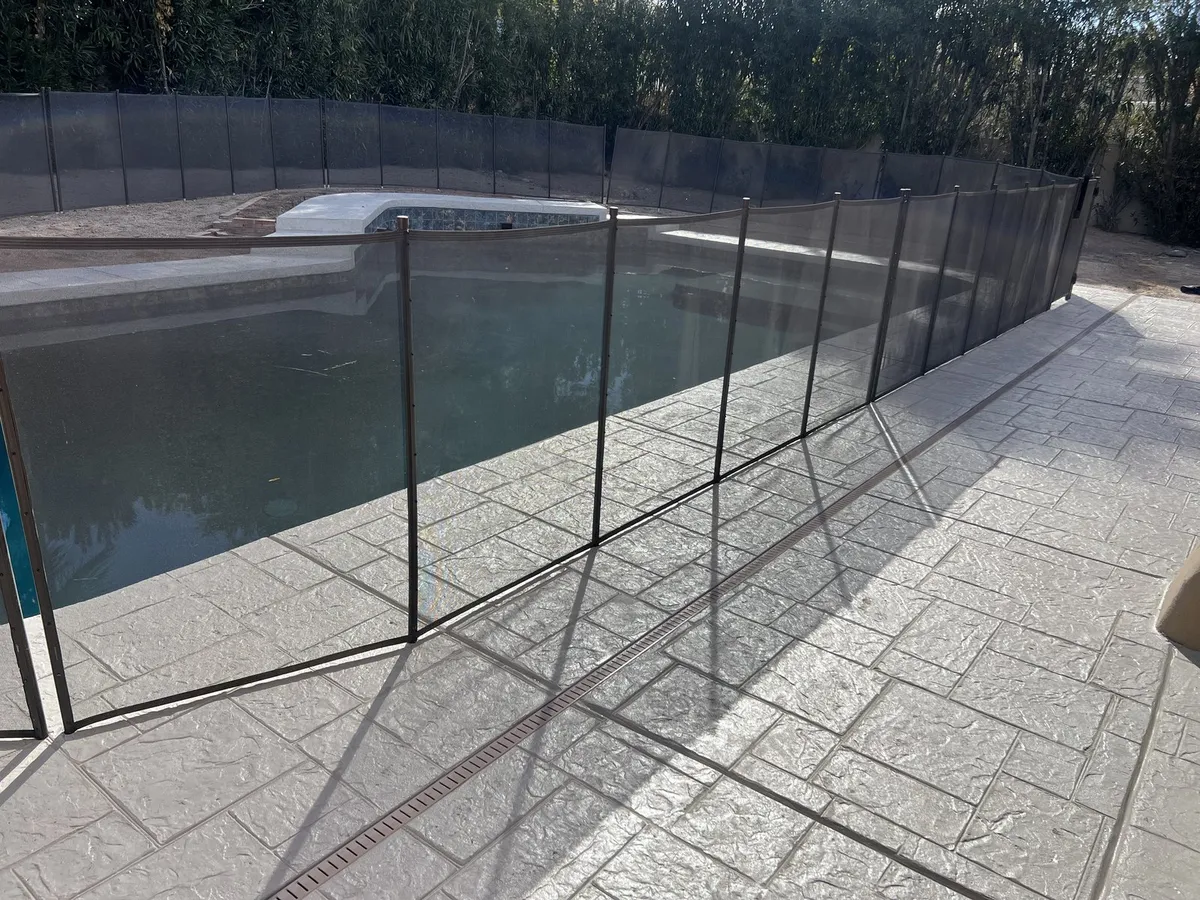
Stamped Concrete Gallery
See our stamped concrete pool deck projects across Arizona




Stamped Concrete Pool Deck FAQs
How long does a stamped concrete pool deck last in Arizona?
12–15 years in the Phoenix Valley. The sealer wears out before the slab does, so plan on a re-seal every 2–3 years in full sun. Decks that never get re-sealed fade and lose the accent color from the low spots well before year twelve.
Can you stamp over my existing concrete?
Often, yes, with a stampable overlay bonded to the slab you already have. The slab has to be stable first: no heaving, no sinking, no sections separated at the joints. An overlay copies whatever the slab does underneath it.
Is stamped concrete hot to walk on in Phoenix summer?
Hotter than a cool deck coating. Dense concrete stores heat. A light color plus a matte sealer narrows the gap without closing it. If barefoot comfort in July is the main goal, cool deck coating is the more honest recommendation.
Is stamped concrete slippery around a pool?
The stamp texture gives real grip; the sealer decides how much of it you keep. Pool decks get a matte sealer with a slip-resistant additive, and the glossy wet-look finishes stay away from the water.
How long before we can use the deck?
Most residential decks take 1–2 days of work. Light foot traffic is fine at 24–48 hours. Furniture, pets and pool service wait for the 3–7 day cure, longer in cool or humid weather.
How much does a stamped concrete pool deck cost?
Every project is quoted in writing from the actual surface after a site visit. Stamped concrete costs a multiple of a coating and a fraction of tearing the deck out. Estimates are free.
Ready to Price Your Stamped Concrete Deck?
Free written estimate, measured on site — call (623) 521-1096 or use the quote form above
Get Free Quote Now