Sports Court Coating & Line Striping in Phoenix
Color coats, crack repair and new lines for the tennis, pickleball, basketball and multi-sport courts you already have, at homes, HOAs and community properties across the Phoenix Valley
Insured · 2-year written workmanship warranty · Free written estimate · Call (623) 521-1096
Court Services by Sport and Surface
This page is the overview of the court work we do. We coat, repair and line existing courts, concrete or asphalt; we don’t grade sites, pour slabs or build new courts. Below: which sports can share a surface, how the lines are laid out, the surface systems, and what we check on your court before we quote. If your court is faded, cracked or holding water and you want the job step by step, see resurfacing a worn sports court. Single-sport details live on our pickleball court resurfacing and lines and basketball court resurfacing and lines pages.
Multi-Sport Lines
One surface, more than one game. Pickleball, basketball, tennis, volleyball and badminton can share a court, each with its own line color. Two or three sports is the practical limit before the lines get hard to read.
Tennis Courts
A doubles court is 78 by 36 feet. We recoat and re-line existing tennis courts, and a resurface is the natural time to blend pickleball lines inside the tennis lines.
Volleyball Courts
Hard-court volleyball lines (18 by 9 meters) fit on many existing multi-sport pads. Where a net can go depends on the post sleeves already in the slab, or on a portable net.
Line Layout
Pickleball lines are 2 inches wide under the USA Pickleball rules. The primary sport gets the boldest lines; the others get distinct colors so nobody argues about which line counts.
HOA & Community Courts
Shared courts for HOAs, apartment communities, schools and parks get recoated and re-lined from a site visit and the owner's specifications, with the scope, products and schedule in writing.
Heat-Resistant Surfaces
Every hard court gets hot in a Phoenix July. Lighter colors reflect more sun than dark blue or green, and UV-stable coating holds its color longer, but summer play still belongs to mornings and evenings.
Court Sizes at a Glance
Playing-line dimensions come from each sport's governing body. The paved area you already have decides which lines fit.
| Court | Playing lines | Paved area needed | Standard |
|---|---|---|---|
| Pickleball | 20 × 44 ft | at least 30 × 60 ft; 34 × 64 ft preferred for tournament play | USA Pickleball |
| Basketball, full court | 94 × 50 ft | plus run-off beyond the lines | NBA / college |
| Basketball, full court | 84 × 50 ft | plus run-off beyond the lines | NFHS (high school) |
| Basketball, half court | 47 × 50 ft (NBA) or 42 × 50 ft (high school) | backyard pads are often smaller | half of a full court |
| Tennis, doubles | 78 × 36 ft | commonly fenced at about 60 × 120 ft | ITF / USTA |
| Volleyball (hard court) | 18 × 9 m (about 59 × 29.5 ft) | plus a free zone around the lines | FIVB / USA Volleyball |
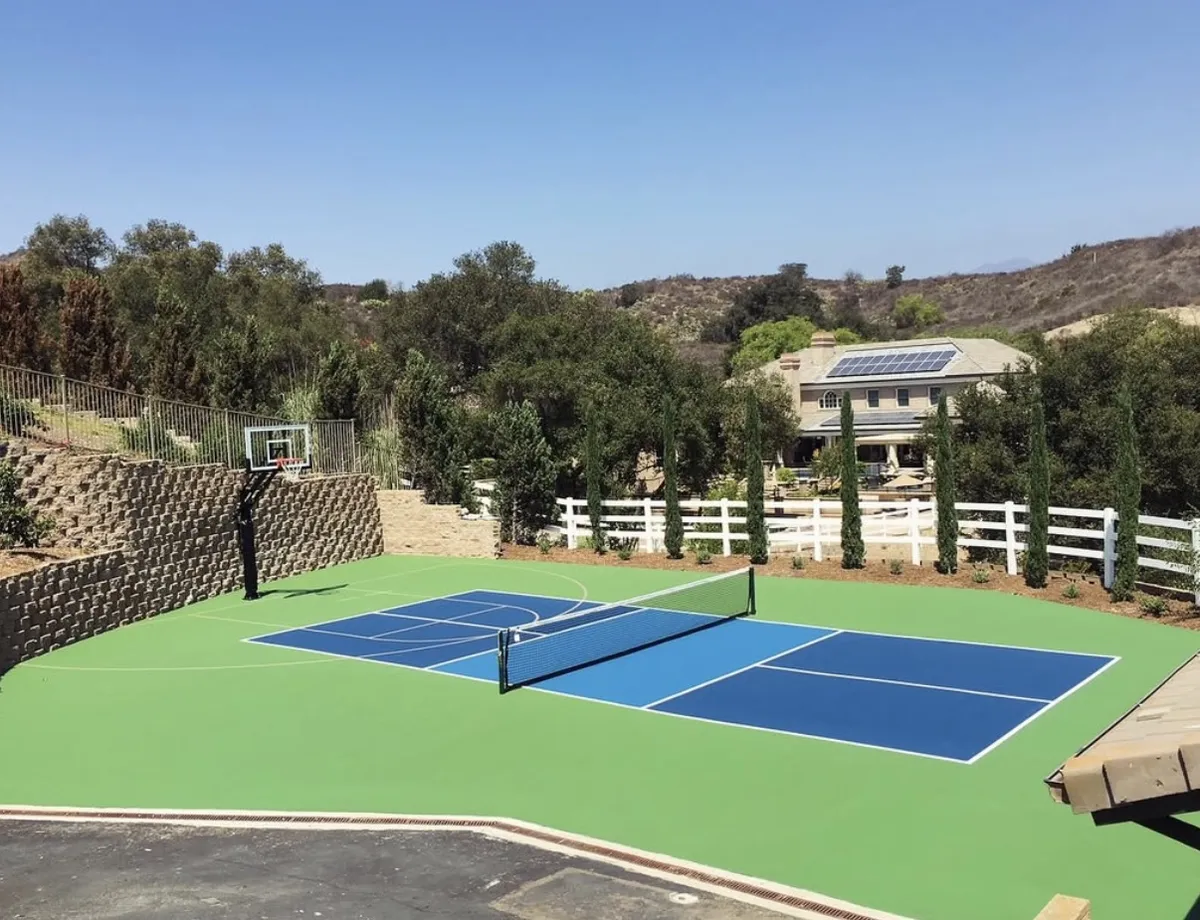
Most backyard pads have no room for a full tennis or basketball court, and that is fine. On a pad around 30 by 60 feet, a common layout is one regulation pickleball court with a basketball shooting area overlapping one end. We measure the slab you have and draw the lines to scale before any paint goes down; that is the cheapest moment to change your mind. Sport-specific details live on the pickleball court page (kitchen, net heights, pickleball lines on tennis courts) and the basketball court page (key, arc, hoop clearance).
Multi-Sport Lines Without the Confusion
- Rank the sports. The game you play most gets the boldest lines, usually white. Each secondary sport gets its own color.
- Keep it to two or three. Every extra layout adds lines crossing the others. Four overlapping sports on a backyard pad is a common regret.
- Check the net posts first. Tennis, pickleball and volleyball nets sit in post sleeves already set in the slab, or on portable nets. Where the sleeves are decides where those lines can go.
- Use the right widths. Pickleball lines are 2 inches wide under the USA Pickleball rules, and the line counts as in.
What We Check on Your Court: Base, Slope and Cure
Concrete or asphalt. Most backyard courts in the Valley are concrete; parks and schools often have asphalt, which tends to crack more as it ages. Both can be recoated, but the coating follows the base: if the slab underneath moves, cracks come back.
Slope. The American Sports Builders Association guideline for hard courts is about 1 percent, roughly an inch of fall every ten feet, in a single plane: side to side, end to end, or corner to corner. We flood the court to see where water sits. Patching shallow low spots is part of the coating job; changing the slope of a whole court is not, and we tell you if that is what it needs.
Cure. If your slab was poured recently, sport coating manufacturers specify at least 28 days of cure for new concrete, and 14 for new asphalt, before the first coat. Coating a green slab traps moisture and leads to blisters and peeling.
Surface Systems: Standard Coating, Cushioned, or Bare Concrete
Phoenix Heat, UV and Monsoon
Heat. Any hard court gets hot on a summer afternoon. Dark blues and greens absorb more sun than light blue or tan, but we will not put a temperature number on a court surface. Plan for morning and evening play from June through September.
Line direction. USA Pickleball recommends north–south play on outdoor courts so players are not staring into a rising or setting sun. Your pad’s direction is already set, but on a square-ish multi-sport pad we use that when deciding which way the pickleball lines run.
UV and monsoon. Sun breaks down coating color over time; the industry rule of thumb is a recoat every four to eight years, covered on our court resurfacing page. The official monsoon season runs June 15 through September 30, and dust storms can ruin a wet coat, so in those months we watch the forecast and choose application days deliberately.
HOAs, Schools, Parks and Apartment Communities
Boards are right to ask for more paperwork on a shared court. Get these in writing from every bidder:
- The surface system by name, the number of resurfacer and color coats, and the line colors for each sport.
- The repair work included: which cracks get filled, which low spots get patched, and what is excluded.
- Closure dates, including cure time before play.
- A certificate of insurance, and the contractor's status with the Arizona Registrar of Contractors at roc.az.gov.
How a Court Coating Job Runs
Repair first, then color, then lines. Our step-by-step process page describes how we run an estimate and a job day, and sports court resurfacing covers what crack and low-spot repair can and can’t fix.
Site Visit & Layout
Measure the court, flood it to find low spots, map the cracks, and pick the sports and line colors.
Clean & Repair
Pressure wash, fill and level cracks, patch birdbaths, and let the patches cure.
Color Coats
Resurfacer where the texture is worn, then fresh color coats.
Lines
Lines measured and taped for each sport, then painted.
Walkthrough
We walk the finished court with you before we call it done.
The coating we apply is covered by our 2-year workmanship warranty. Like any honest coating warranty, it excludes slab movement and structural cracks.
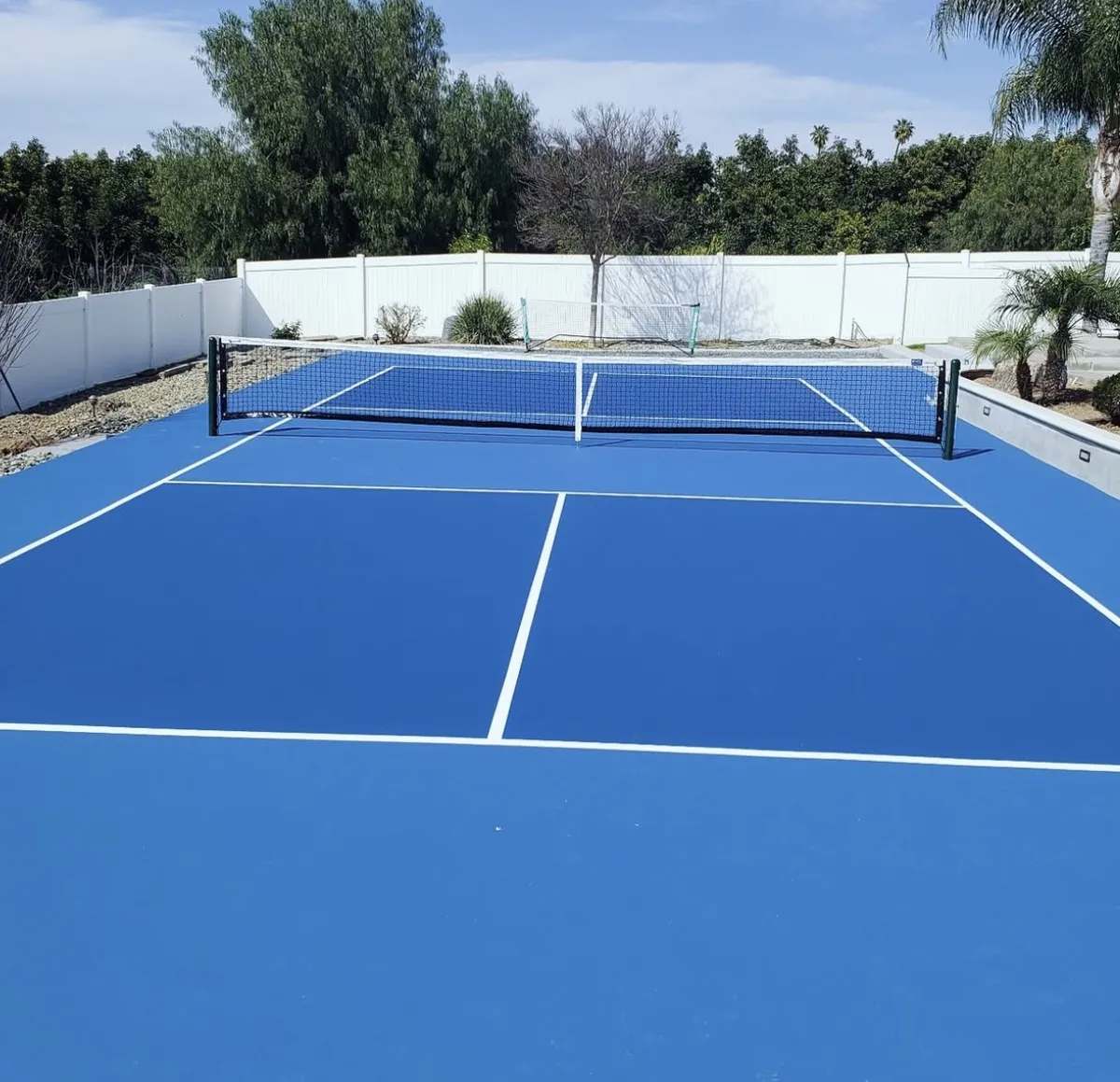
Sports Court Gallery
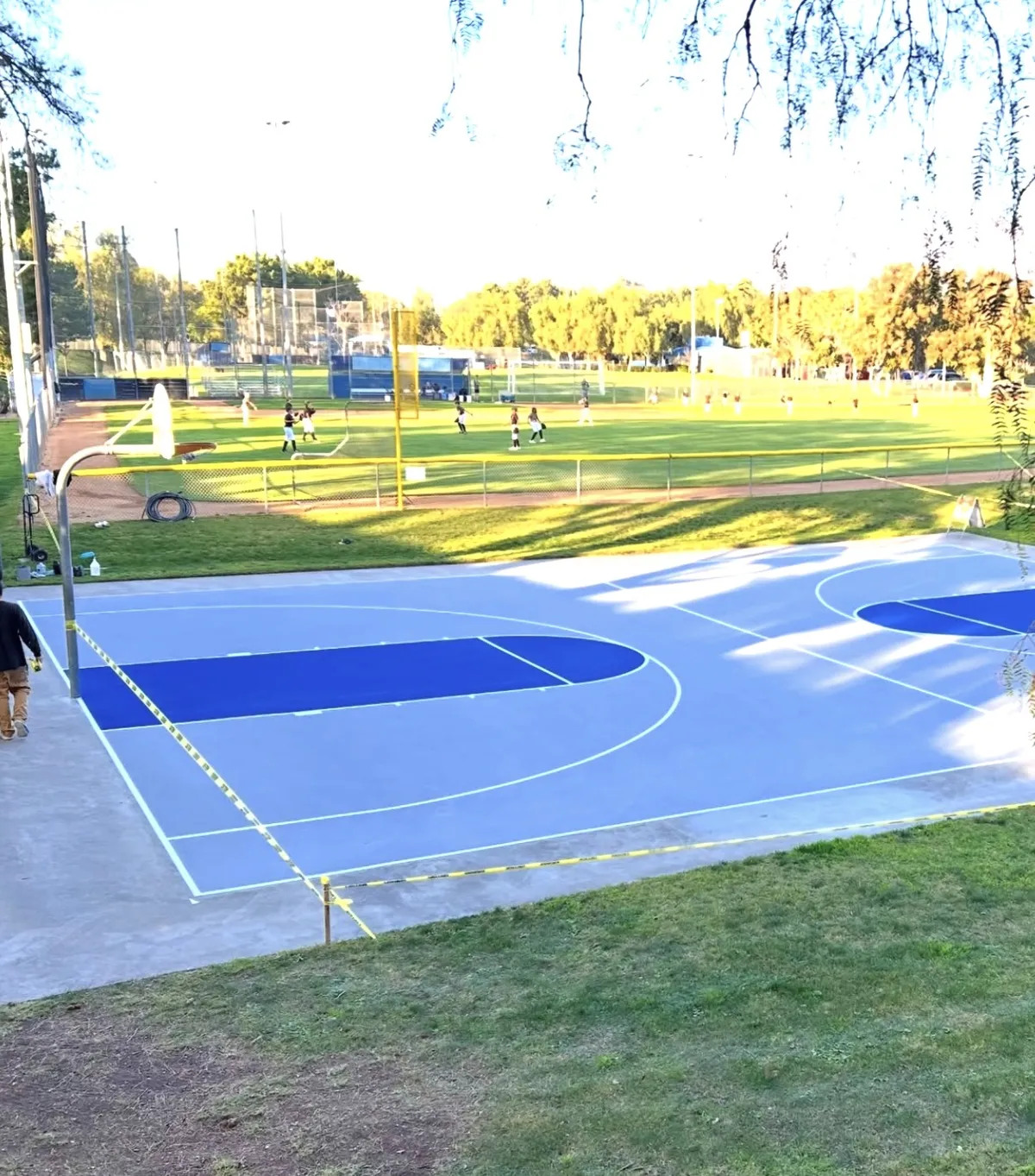
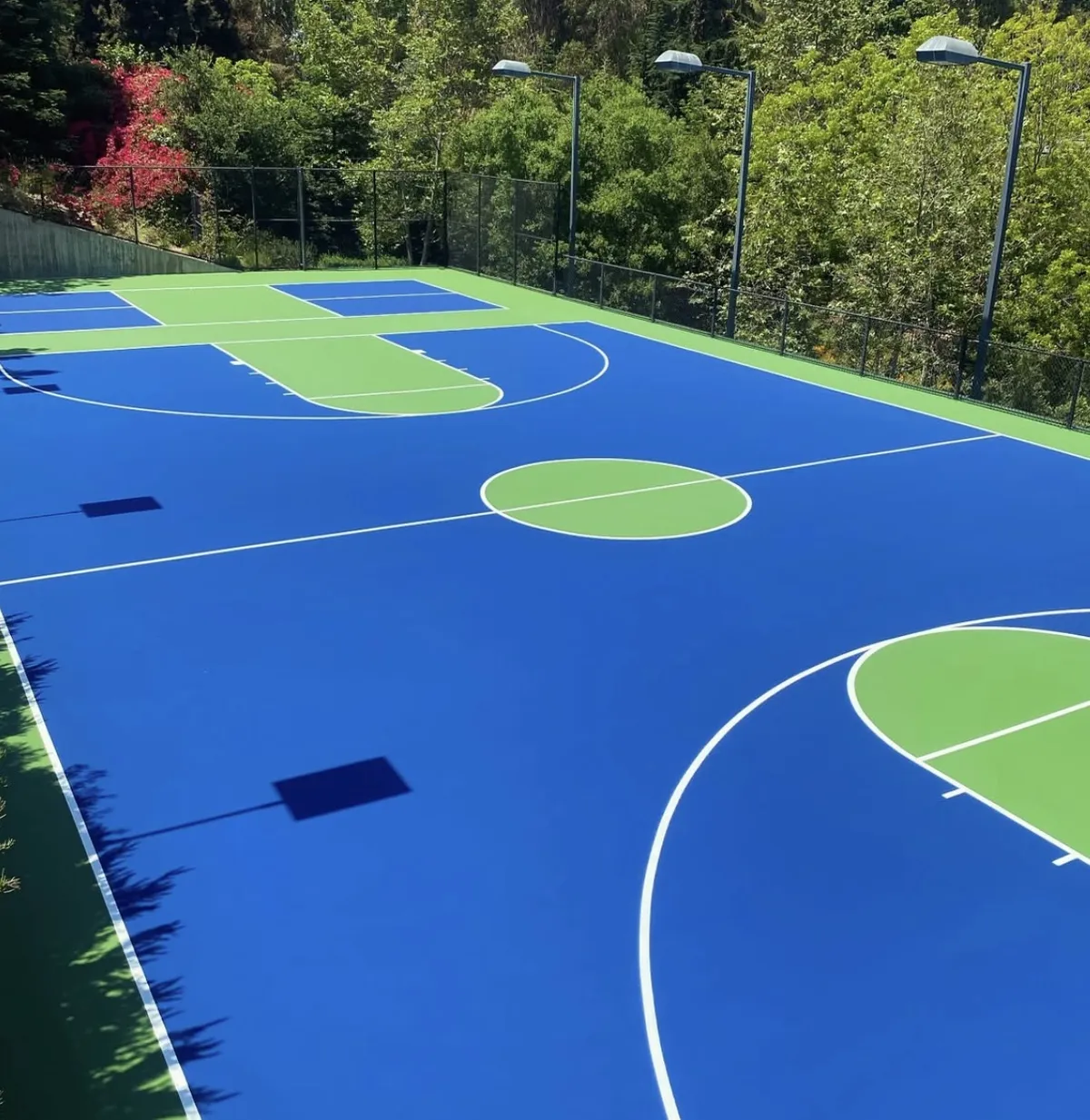
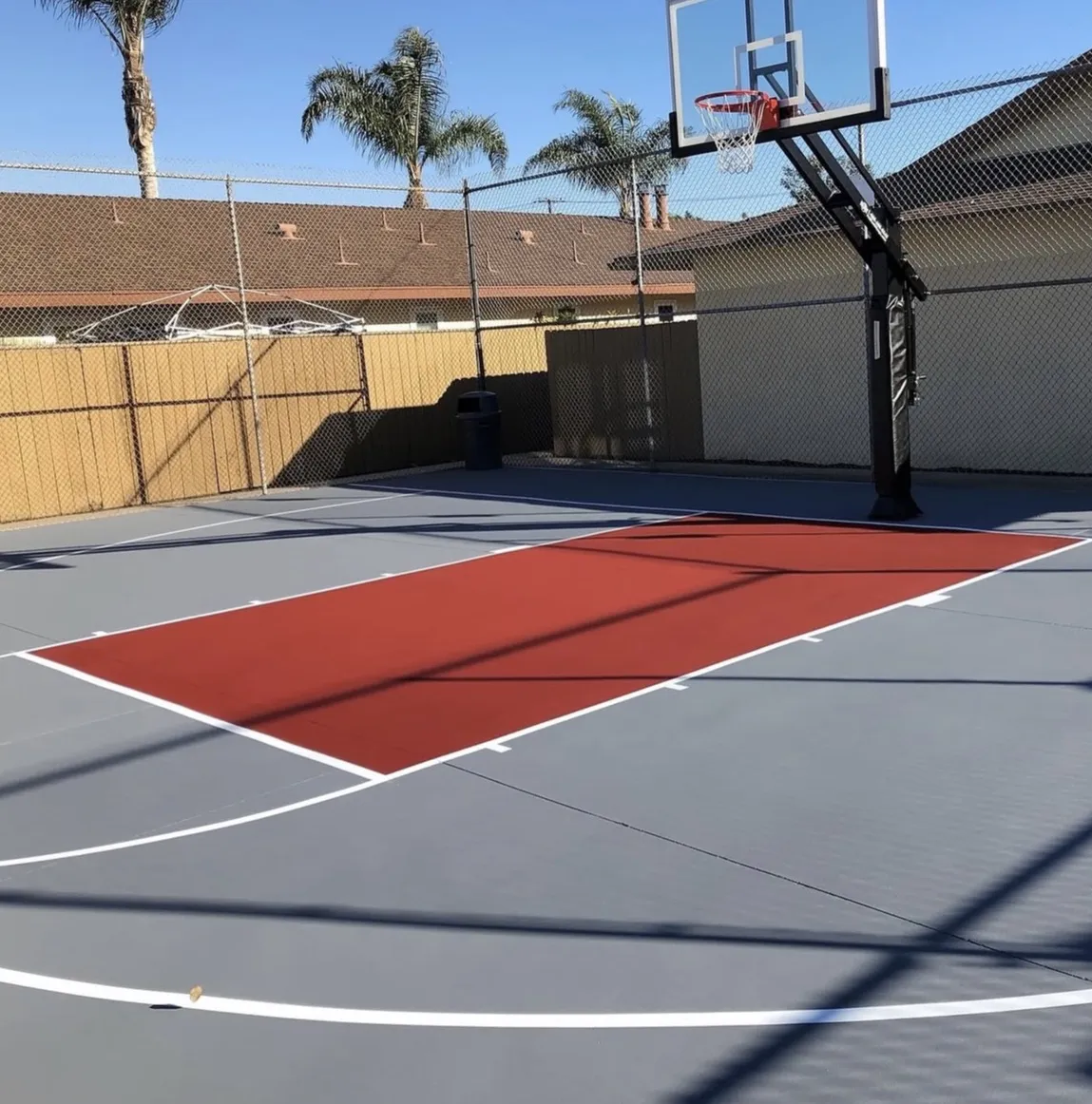
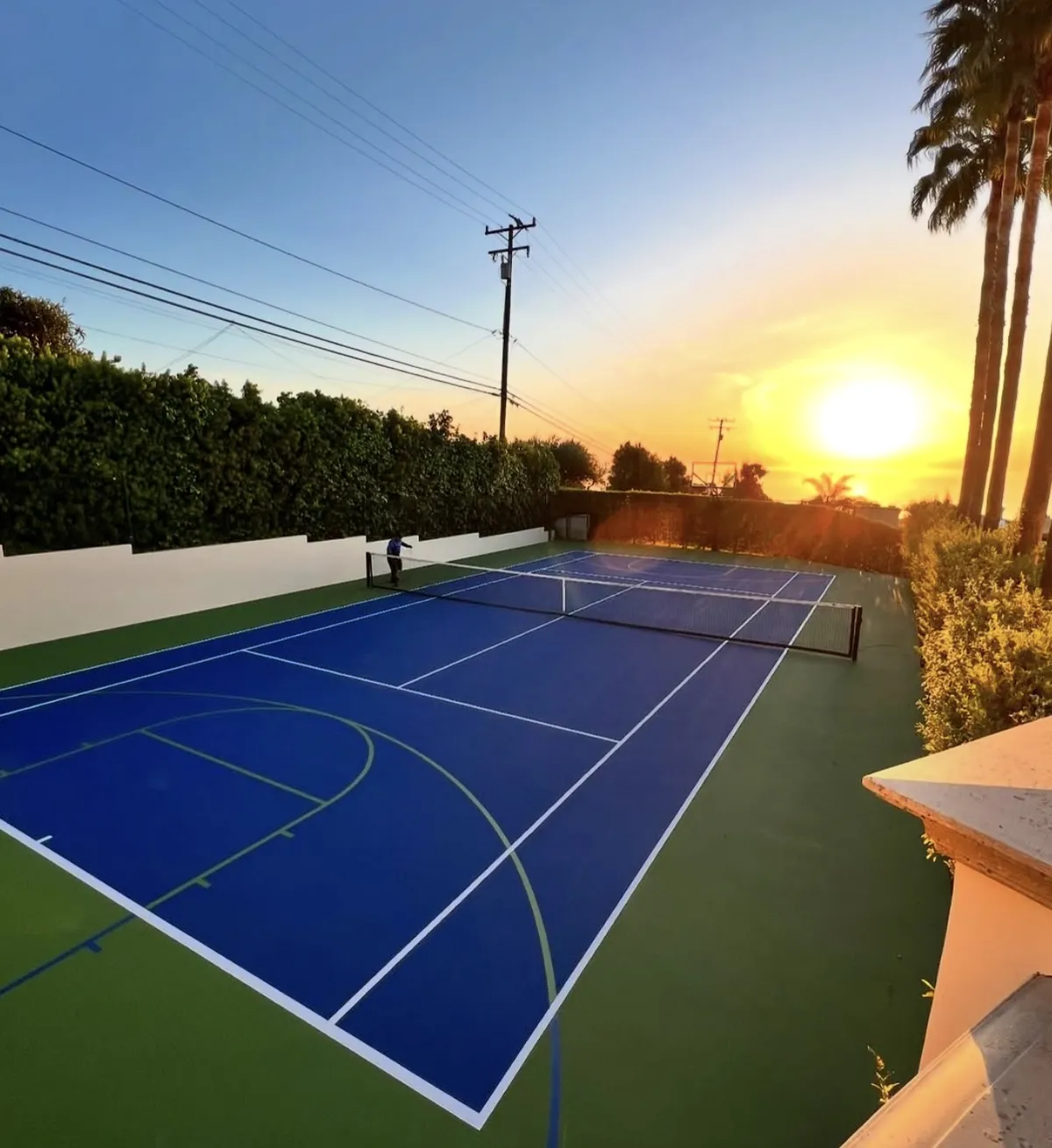
court colors and multi-sport line layouts
Sports Court Services FAQs
What sports can share one court surface?
Pickleball, basketball, tennis, volleyball and badminton can all share one court, each with its own line color. Two or three sports is the comfortable limit; past that, overlapping lines get hard to read mid-rally.
Do you build new courts?
No. We coat, repair and line courts that already exist, concrete or asphalt. We don't grade sites, pour slabs, or set posts and hoops. If a concrete contractor is pouring a new slab for you, coating manufacturers call for at least 28 days of cure before any coating goes on.
Can you add pickleball lines to a court we already have?
Yes. Pickleball lines can go on an existing tennis court, basketball court or concrete pad with enough room, either as part of a resurface or as line work on a sound surface. Lines are 2 inches wide under the USA Pickleball rules and get their own color so players can tell the sports apart.
How much does court coating cost?
Every court is quoted from the actual court after a visit. Size, how much crack and low-spot repair it needs, the surface system, and the number of sports lined all move the number. Estimates are free and in writing.
Do you quote courts for HOAs, schools and parks?
Yes, we quote court work for HOAs, apartment communities, schools and parks across the Phoenix metro area. Public projects often bring their own specifications and bid rules, so we go through those before we quote. Whoever you hire, check their status with the Arizona Registrar of Contractors at roc.az.gov.
My court is worn out. Is this the right page?
This page is the overview of our court services. If your court is faded, cracked, holding water or has lines you can barely see, our sports court resurfacing page walks through the repair-and-resurface job step by step, including what it can and cannot fix.
Ready to Refresh Your Court?
Free written estimate, measured and laid out on your actual court. Tell us the court type when we call and we will plan the visit.
Insured · 2-year written workmanship warranty · Free written estimate. We call within 24 hours, Mon–Sat 7AM–8PM.