Sports Court Resurfacing in Phoenix
Sports court resurfacing repairs the cracks and low spots on the tennis, pickleball or basketball court you already have, then puts fresh color coats and new lines over the existing base.
Insured · 2-year written workmanship warranty · Free written estimate · Call (623) 521-1096
Resurfacing an Existing Court, Not Building a New One
Sports court resurfacing renews the playing surface on the court you already have: cracks and low spots are repaired, then fresh color coats and new lines go on over the existing base. Sport surfaces are made to be renewed, not replaced. When a court's color has gone chalky, the lines have worn off, or cracks and puddles have started to interfere with play, resurfacing puts a new playing surface on the base you already have. This page covers that job for backyard, HOA, school and park courts. We work on existing courts only and don’t build new ones. If the surface is sound and you only need new or added lines, see court line striping.
Crack Repair
Cracks are cleaned out, filled and leveled so they stop catching feet and balls. Honest note: movement cracks often come back, and we say so up front.
Low Spots & Birdbaths
Low spots are found by flooding the court, then marked and patched level before any color goes on.
New Lines & Added Sports
Worn lines are laid out fresh. A resurface is the easiest time to add pickleball lines to a tennis or basketball court.
Color Choice & Heat
Lighter colors absorb less sun than dark blue or green. No hard court is cool in July, but color still changes how hot it plays.
Cushioned Upgrade
Rubber-filled cushion layers can go under the new color coats for a softer court that is easier on knees.
Recoat
Resurfacer fills worn texture and patched areas, then fresh color coats give the court an even look and consistent bounce.
Signs Your Court Is Due
The common industry rule of thumb is a recoat every four to eight years. Full Arizona sun and daily play push a court toward the short end.
What Resurfacing Involves
Most of the durability comes from the first three steps. Our process page explains how we run an estimate and a job day.
Assess
Walk the court, sound for loose coating, flood it to find low spots, and map the cracks.
Clean
Pressure wash dirt, mildew and loose or peeling coating down to a sound surface.
Repair
Fill and level cracks, patch birdbaths, and let the patches cure.
Resurfacer
Sand-filled resurfacer evens out texture and blends patches into the court.
Color & Lines
Fresh color coats, then lines measured and taped for each sport.
Cracks and Birdbaths: What Resurfacing Can and Can't Fix
Cracks. Filling and leveling a crack makes the court safe and playable, and the new color hides it for a while. What resurfacing cannot do is stop the slab underneath from moving. Asphalt courts in particular crack more as they age and bake, and those cracks tend to reappear. When we see that pattern we write it into the estimate rather than promising it away.
Birdbaths. The American Sports Builders Association defines a birdbath as standing water deeper than 1/16 inch, about the thickness of a nickel, that remains an hour after drainage has stopped in 70°F sunlight. Shallower puddles that dry within the hour are within tolerance. The ASBA is also candid that patching materials can shrink as they dry and that birdbaths may come back as a court settles, so repair reduces the problem rather than guaranteeing it is gone.
When it is not a resurfacing job. Many wide cracks, heaving, or large areas that hold water point to a base problem. The ASBA notes that sometimes an overlay or full reconstruction is the only long-term fix. That is base and slab work we don’t take on, and we tell you so at the estimate instead of selling a coat of paint.
Source: ASBA, Birdbaths on Older Courts.
Adding Pickleball to a Tennis or Basketball Court
A resurface is the cheapest moment to add pickleball, because the new color coats give a clean base for the extra lines. On a tennis court, two pickleball courts can usually be blended inside the tennis lines, or a fully converted court can hold more. Pickleball lines are 2 inches wide under the USA Pickleball rules and should be a different color from the existing lines. Net height differs between the sports, so blended courts need a plan for nets. Kitchen dimensions and conversion layouts are on our pickleball court resurfacing and lines page, and key and arc sizes on the basketball court page.
Scheduling Around Phoenix Weather
Coatings need dry weather and a surface within the manufacturer's temperature range, and each coat has to dry before the next. The official monsoon season runs June 15 through September 30, and dust storms can ruin a wet coat, so during those months we watch the forecast and choose application days deliberately. Fall through spring is the easiest window for most courts.
HOAs, schools and parks. Ask every bidder for the system by name, the number of resurfacer and color coats, line colors, closure dates and a certificate of insurance, and check their status with the Arizona Registrar of Contractors at roc.az.gov.
The coating we apply is covered by our 2-year workmanship warranty. It excludes slab movement and structural cracks, which is why we are straight with you about cracks before the work starts.
Other Court Pages
Court services by sport and surface
Pickleball Court Resurfacing
Regulation 20 by 44 lines, kitchen and net specs, and pickleball lines on tennis courts.
Pickleball court details →Basketball Court Resurfacing
Half courts, full courts and backyard pads, with key and arc lines laid out from your hoop.
Basketball court details →Sports Court Coating & Striping
All court services: multi-sport lines, tennis and volleyball courts, and surface choices.
All court services →What Decides Your Quote
Every court is measured and quoted in writing after a site visit, and the estimate is free. These are the things that move the number.
How Long It Takes, by Court Size
Typical work days in dry weather. These are planning ranges, not promises: your written estimate lists your exact work days and the date you can play again.
Drying time between coats follows the coating maker’s data sheet for the product on your court. In Phoenix heat coats dry fast, so in summer we start early and stop before the afternoon gets too hot for the coating’s temperature range.
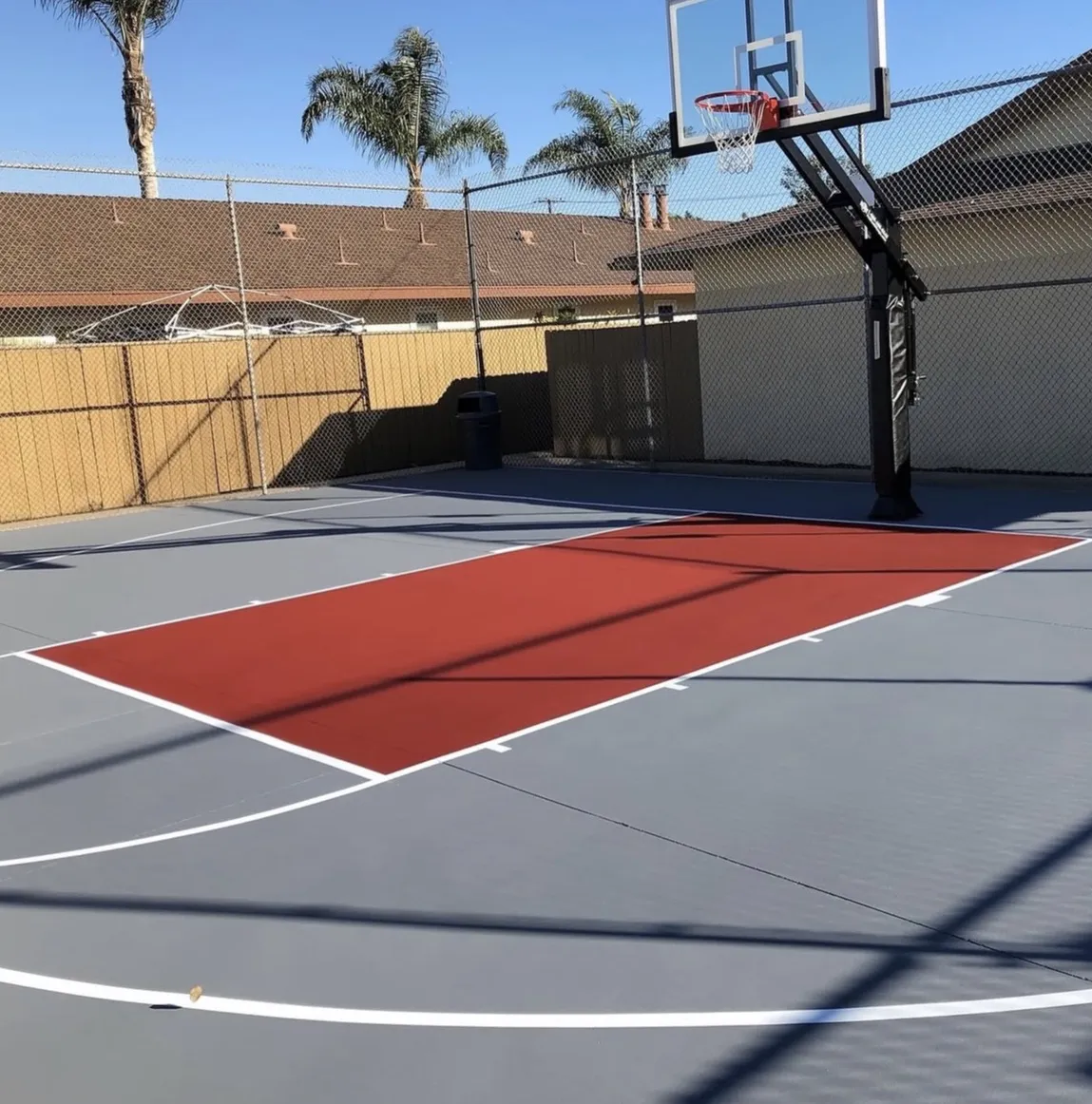
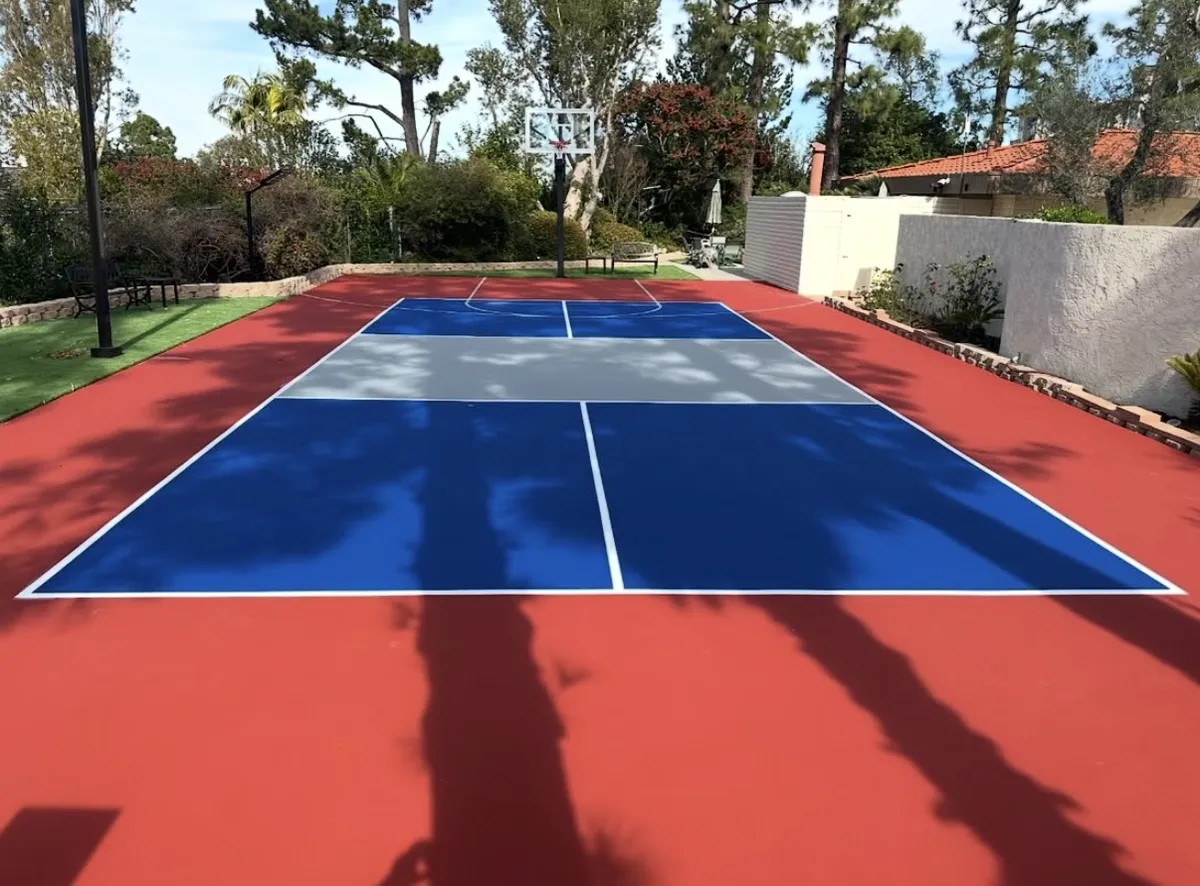
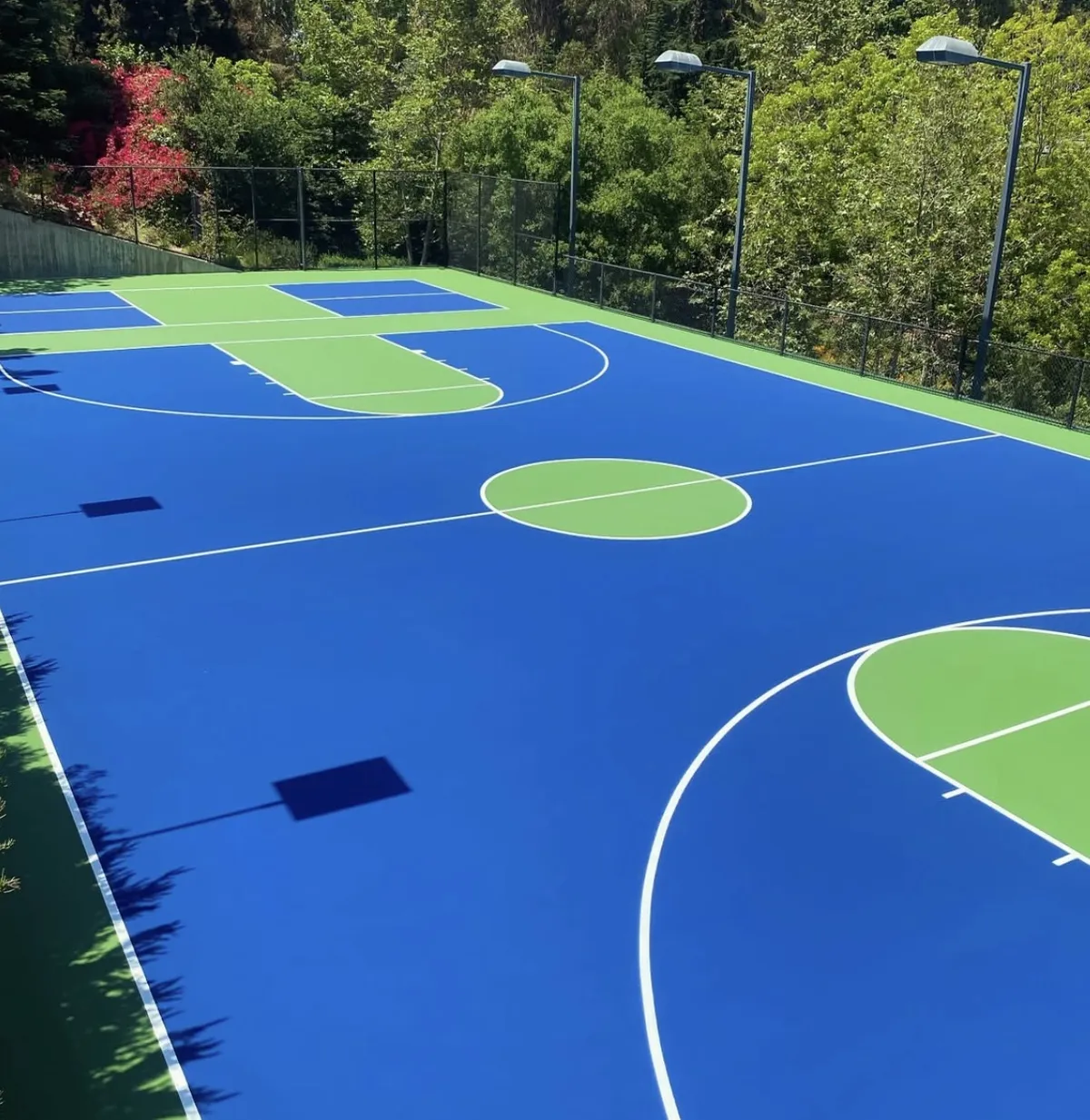
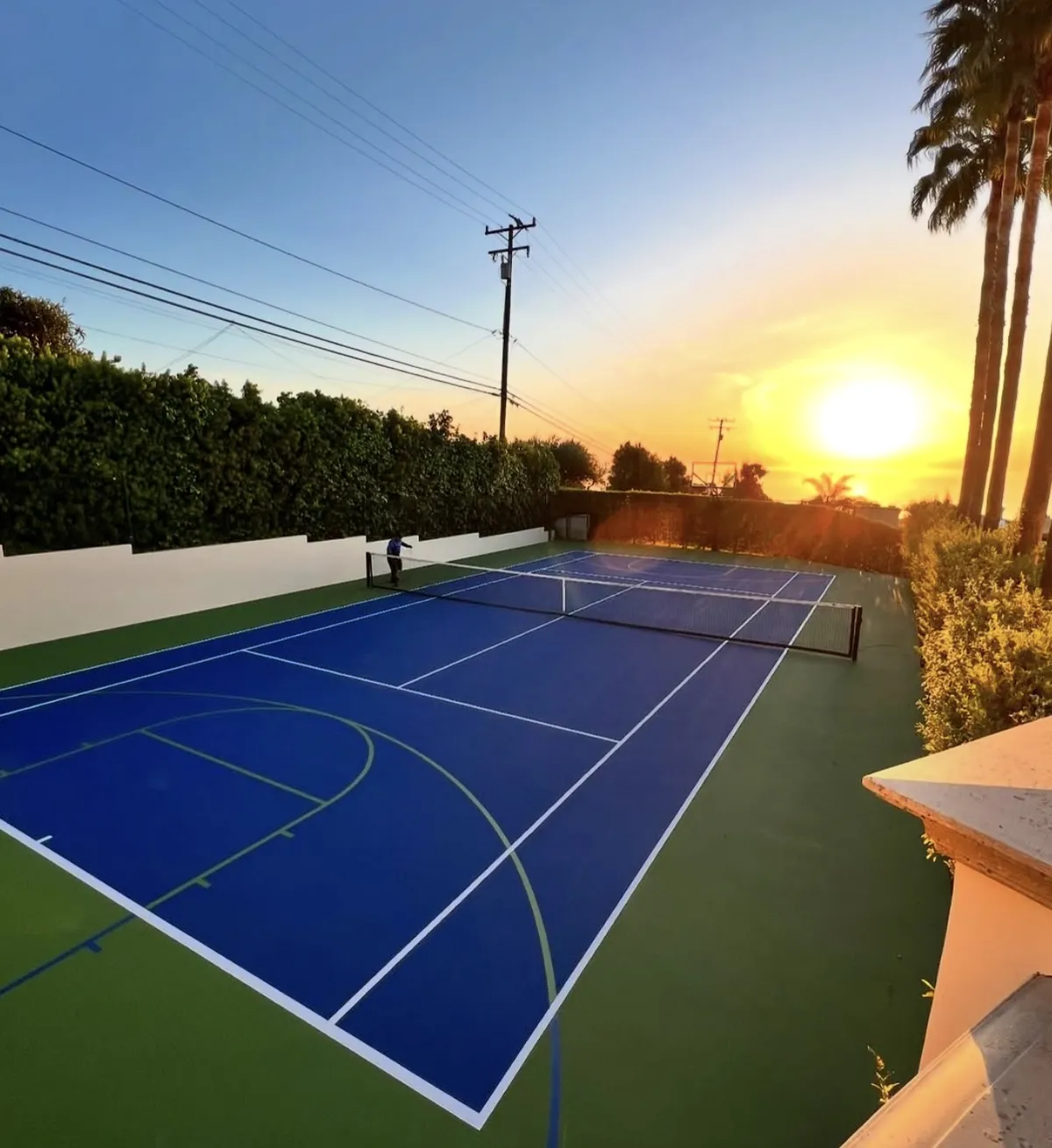
Sports Court Gallery
Court colors and line layouts
Sports Court Resurfacing FAQs
How often does a sports court need resurfacing?
The common industry rule of thumb for courts is every four to eight years. Heavy daily play and full Arizona sun push a court toward the short end; a lightly used backyard court can go longer. Color that rubs off on your hand, slick worn spots and lines you can barely see are the signs it is due.
Can you fix the cracks in my court for good?
Usually not, and anyone who promises it is guessing. Cracks are cleaned, filled and leveled so they stop catching feet and balls, but cracks from slab movement or an aging asphalt base often come back over time. If we see that pattern, we write it into the estimate.
What is a birdbath, and can it be fixed?
A birdbath is a low spot that holds water. The American Sports Builders Association counts it as one when water deeper than about 1/16 inch, the thickness of a nickel, is still there an hour after drainage stops. Low spots can be patched and leveled, but the ASBA itself notes repairs are imperfect and some birdbaths return as a court settles.
Can you add pickleball lines to my tennis or basketball court?
Yes. Adding pickleball lines during a resurface is common, because the new color coats give a clean base for the extra layout. Lines are 2 inches wide under the USA Pickleball rules, and each sport gets its own color so players can tell them apart.
How long will the court be closed?
It depends on court size, how much repair it needs, and the weather, because each coat has to dry before the next one goes on. Your written estimate lists the work days and when the court can reopen, so an HOA or school can post the closure in advance.
How much does court resurfacing cost?
Every court is quoted from the actual surface after a site visit. Court size, the amount of crack and low-spot repair, the number of coats, cushioning, and how many sports get lines all affect the price. Estimates are free and in writing.
Google reviews
What Our Pool-Deck Customers Say
These Google reviews are from pool-deck jobs, quoted in our customers’ own words.
“They completely transformed our pool deck. The cool deck surface keeps it comfortable even in the Arizona summer heat. Great crew, very professional.”
“Got a quote within a day and the work was done in 3 days. Pool deck looks brand new. Price was fair and the warranty gives us peace of mind.”
“Best decision we made for our backyard. The deck stays cool, looks amazing, and the kids can walk barefoot again. Highly recommend Master Pool Decks!”
Ready to Bring Your Court Back?
Free written estimate, measured on your actual court. We look at cracks, low spots and the old coating before we quote.
Insured · 2-year written workmanship warranty · Free written estimate. We call within 24 hours, Mon–Sat 7AM–8PM.