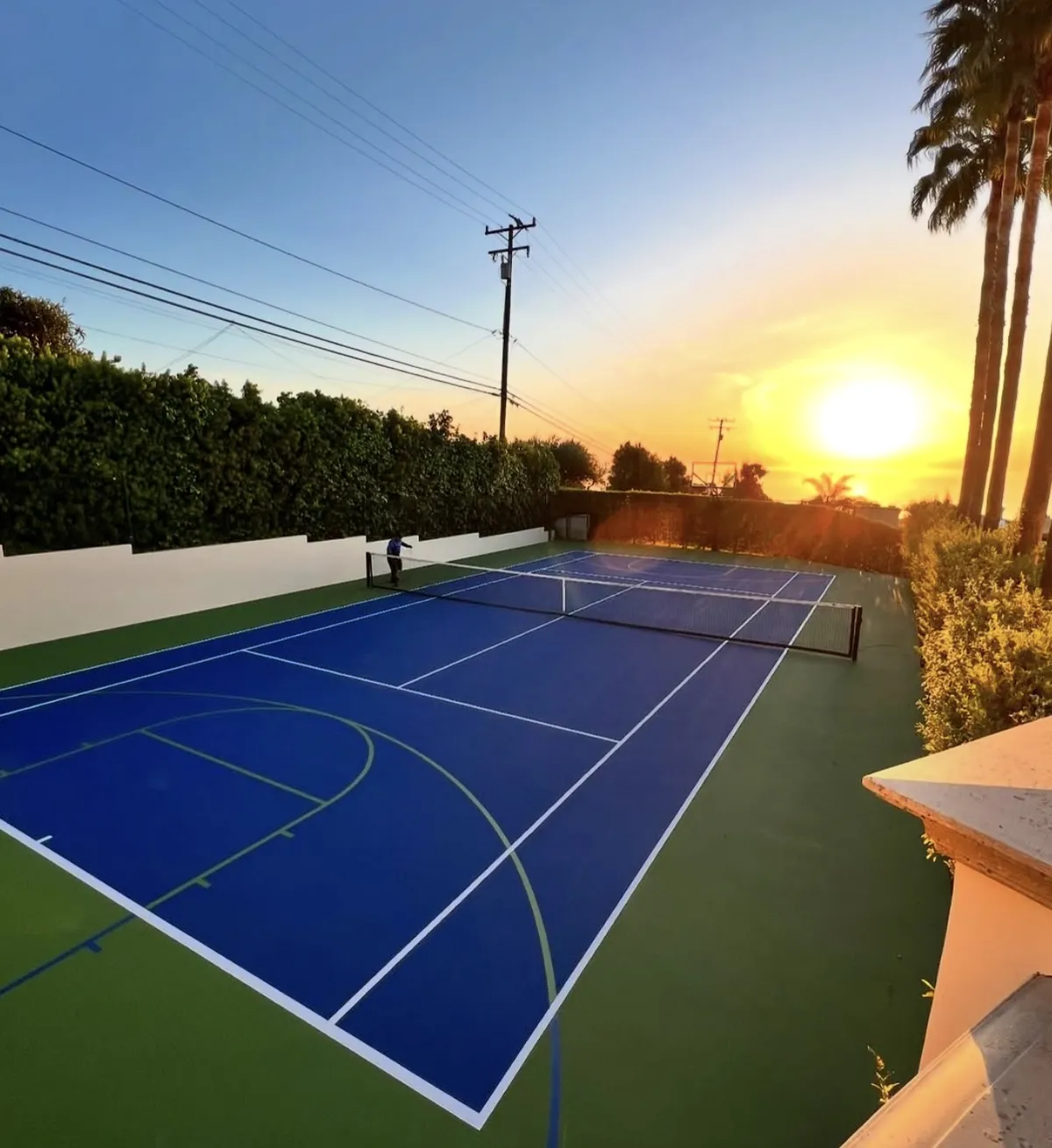
Pickleball Court Resurfacing in Phoenix
Fresh coating color, crack repair and regulation pickleball lines on the court, tennis court or pad you already have
Insured · 2-year written workmanship warranty · Free written estimate · Call (623) 521-1096
Pickleball on the Court You Already Have
A pickleball court is small, 20 by 44 feet, but it needs more paved area around it than most people expect and a surface that plays the same in March and July. We resurface existing pickleball courts, add pickleball lines to tennis and basketball courts, and line pads that have the room; we don’t build new courts or pour slabs. For the full repair-and-resurface process on a worn court, see sports court resurfacing for existing courts. Want pickleball sharing space with other games? See our sports court coating and line services or basketball court resurfacing.
Regulation Lines
20 by 44 feet inside a paved area of at least 30 by 60, per USA Pickleball, with a 7-foot kitchen on each side of the net. We check that your pad has the room before we lay it out.
Coated Surfaces
Multi-coat textured coating for consistent bounce and grip. The sand content sets how fast the court plays.
Custom Colors
Separate colors for the court and the run-off. Lighter tones absorb less sun than dark blue, which matters in a Phoenix summer.
Residential & Commercial
Backyard courts and multi-court layouts for HOAs, parks and clubs, quoted from the existing court and the owner's specifications.
Crack Repair
Cracks are cleaned out, filled and leveled before color goes on. Movement cracks can come back, and we will not tell you otherwise.
Line Marking
Lines are 2 inches wide under the USA Pickleball rules and count as in. They are measured and taped before they are painted.
Pickleball Court Dimensions
From USA Pickleball's rulebook and court guidance.
| Item | Specification |
|---|---|
| Court (singles and doubles) | 20 × 44 ft |
| Non-volley zone (kitchen) | 7 ft from the net on each side |
| Net height | 36 in at the sidelines, 34 in at the center |
| Line width | 2 in; the line counts as in |
| Total paved area | at least 30 × 60 ft; 34 × 64 ft preferred for tournament play |
| Orientation (outdoor) | north–south |
The run-off is not wasted space. Players chase lobs behind the baseline and dink wide off the sidelines, and a court with a wall or fence right at the line plays small and gets people hurt. If space is tight, take a little from the run-off before you shrink the court, and don’t run the lines right up to a fence or wall.
Adding Pickleball to a Tennis Court
A tennis court is a common starting point for HOAs and clubs, and there are two ways to go:
- Blended lines. Two pickleball courts are lined inside the tennis court in a different color, and both sports keep the court. The catch is the net: a tennis net is set higher than a pickleball net, so blended courts need portable pickleball nets or an agreed way to lower the tennis net.
- Full conversion. The tennis lines are covered with new color and the space is laid out for dedicated pickleball courts. More courts, more play, and no more tennis. Permanent pickleball posts need new sleeves in the slab, which is separate from the coating work; portable nets avoid that.
Either way, the best time to do it is during a resurface, when new color coats give a clean base for the new lines. That work is covered on our court resurfacing page.
Heat, Slope and Noise: The Phoenix Details
Heat. Every hard court gets hot in summer. The classic dark blue court absorbs more sun than lighter blues, greens or tans, so color is worth thinking about, but summer play still belongs to mornings and evenings. We will not put a temperature number on a court surface.
Slope and monsoon. The American Sports Builders Association guideline for hard courts is about a 1 percent slope, roughly an inch every ten feet, in a single plane. The monsoon season, June 15 through September 30, shows exactly where a court holds water. In those months we watch the forecast and choose application days deliberately.
Cure. If the slab was poured recently, it needs at least 28 days before coatings go on, per coating manufacturers. Coating early traps moisture under the color.
Noise. Pickleball is louder than tennis, and neighbor complaints are common. Check HOA rules on play hours and distance to the nearest house before you add pickleball lines to a shared or backyard court.
How a Pickleball Court Job Runs
Our process page explains how we run an estimate and a job day. On an existing court it goes in this order:
Measure & Lay Out
Court and run-off measured, lines drawn to scale on the slab you have.
Clean & Repair
Pressure wash, fill and level cracks, patch low spots.
Resurfacer & Color
Sand-filled resurfacer where needed, then color coats for the court and run-off.
Lines
Lines measured, taped and painted to USA Pickleball dimensions.
For HOA and club courts, ask every bidder for the surface system and number of coats in writing, and check their status with the Arizona Registrar of Contractors at roc.az.gov. The coating we apply carries our 2-year workmanship warranty; like any honest coating warranty, it excludes slab movement and structural cracks.
Sources: USA Pickleball court guidance and Official Rulebook (dimensions, lines, nets, orientation); ASBA hard-court guidelines (slope); sport coating manufacturer data sheets (cure time).
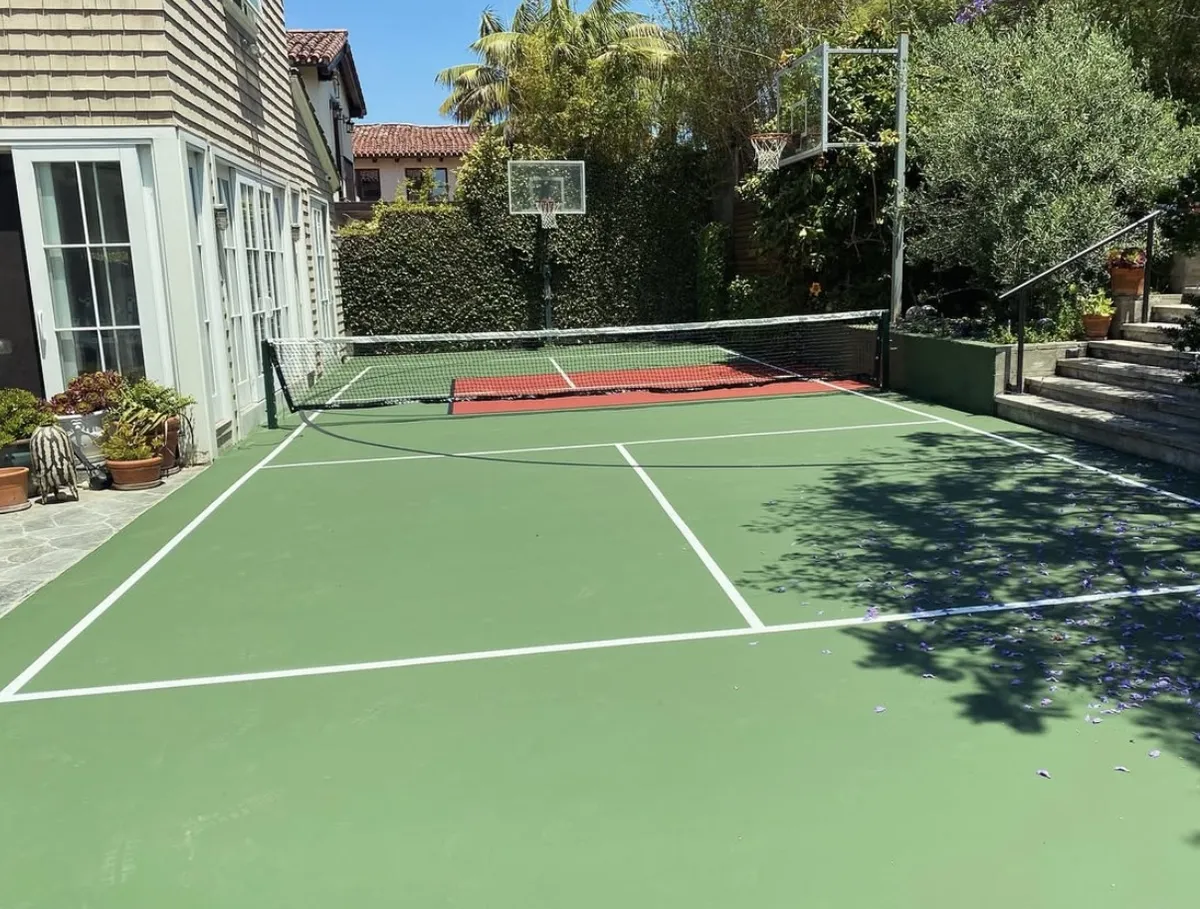
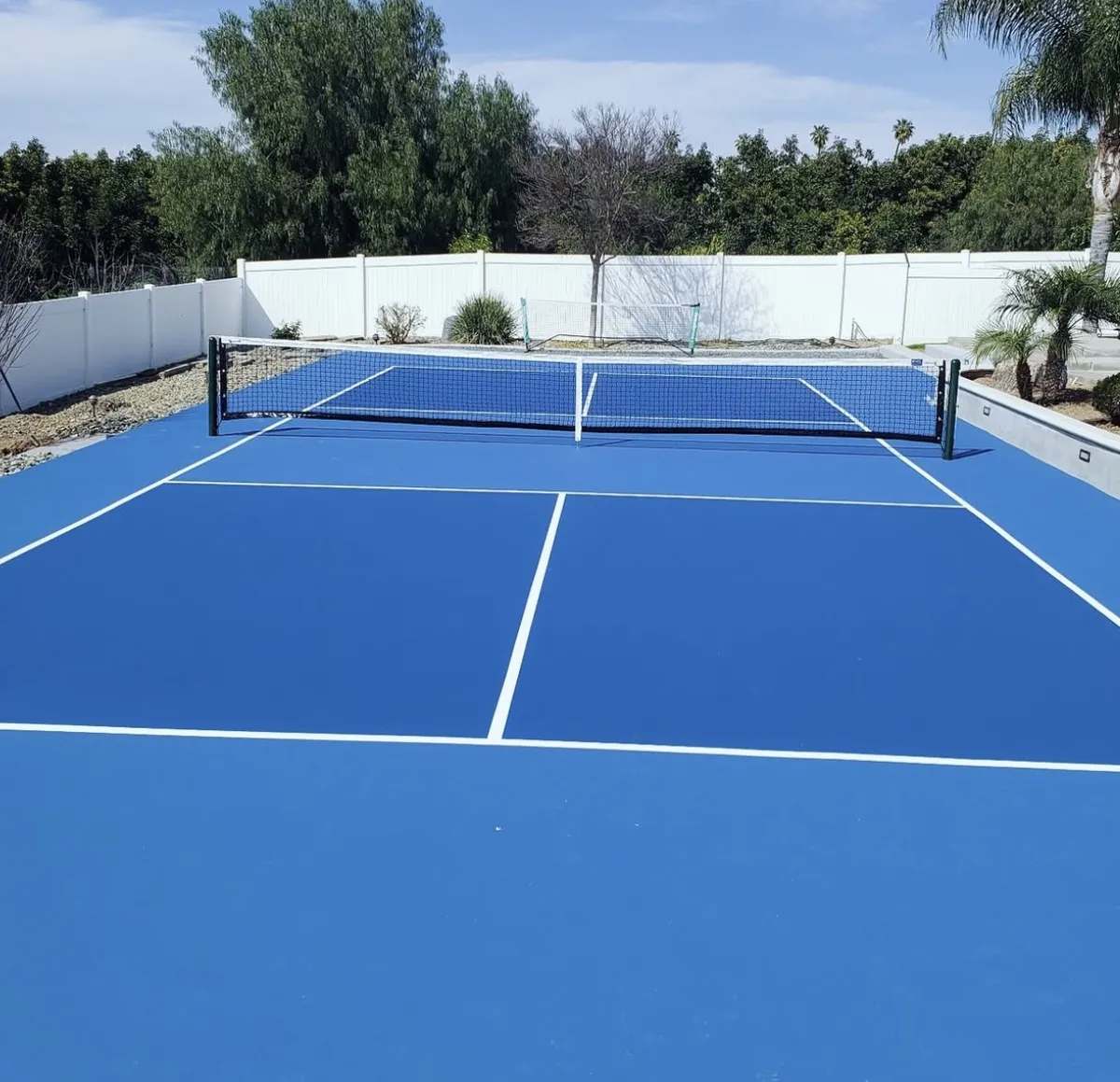
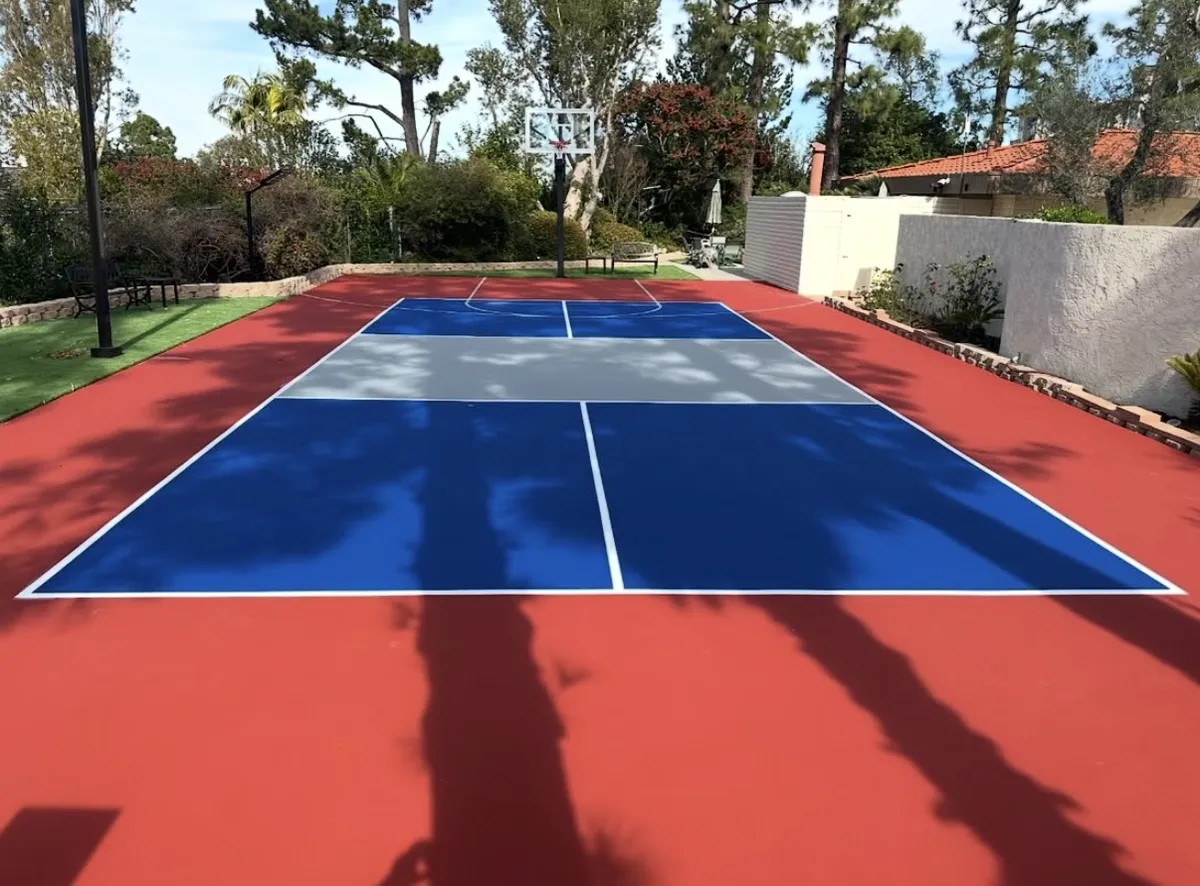
Pickleball Court Gallery
Court colors and pickleball line layouts
Pickleball Court Resurfacing FAQs
How much space does a pickleball court need?
The court itself is 20 by 44 feet. USA Pickleball calls for a total paved area of at least 30 by 60 feet, which leaves 5 feet beyond each sideline and 8 feet behind each baseline, and prefers 34 by 64 for tournament play. If a pad is tight, trim the run-off a little before shrinking the court.
Do you build new pickleball courts?
No. We resurface, repair and line courts that already exist, and add pickleball lines to tennis courts, basketball courts and pads with enough room. We don't grade yards or pour slabs. If a concrete contractor is pouring a new slab for you, coating manufacturers call for at least 28 days of cure before any coating goes on.
What surface is best for pickleball?
A textured sport surface is the standard for outdoor pickleball. The amount of sand in the coats sets ball speed and grip. A cushioned coating system adds rubber-filled layers underneath for a softer feel, at a higher cost. Bare concrete with painted lines is the cheapest option and plays the roughest.
Can I add pickleball lines to an existing tennis court?
Yes. Two pickleball courts usually fit inside a tennis court's lines as a blended layout, and a fully converted tennis court can hold more. Pickleball lines are 2 inches wide and should be a different color from the tennis lines. A resurface is the best time to add them, because the new color gives a clean base.
Is pickleball too loud for my HOA?
Pickleball is noticeably louder than tennis, and noise complaints are common in neighborhoods. Before you add pickleball lines to a shared or backyard court, check your HOA's rules on play hours, and think about distance from the nearest neighbor's house.
How much does pickleball court resurfacing cost in Phoenix?
Every court is quoted from the actual court after a visit. Court size and run-off, how much crack and low-spot repair it needs, the surface system, and any added sport lines all affect the price. Estimates are free and in writing.
Ready to Refresh Your Pickleball Court?
Free written estimate for pickleball court resurfacing and lines in the Phoenix Valley, measured on your actual court.
Insured · 2-year written workmanship warranty · Free written estimate. We call within 24 hours, Mon–Sat 7AM–8PM.