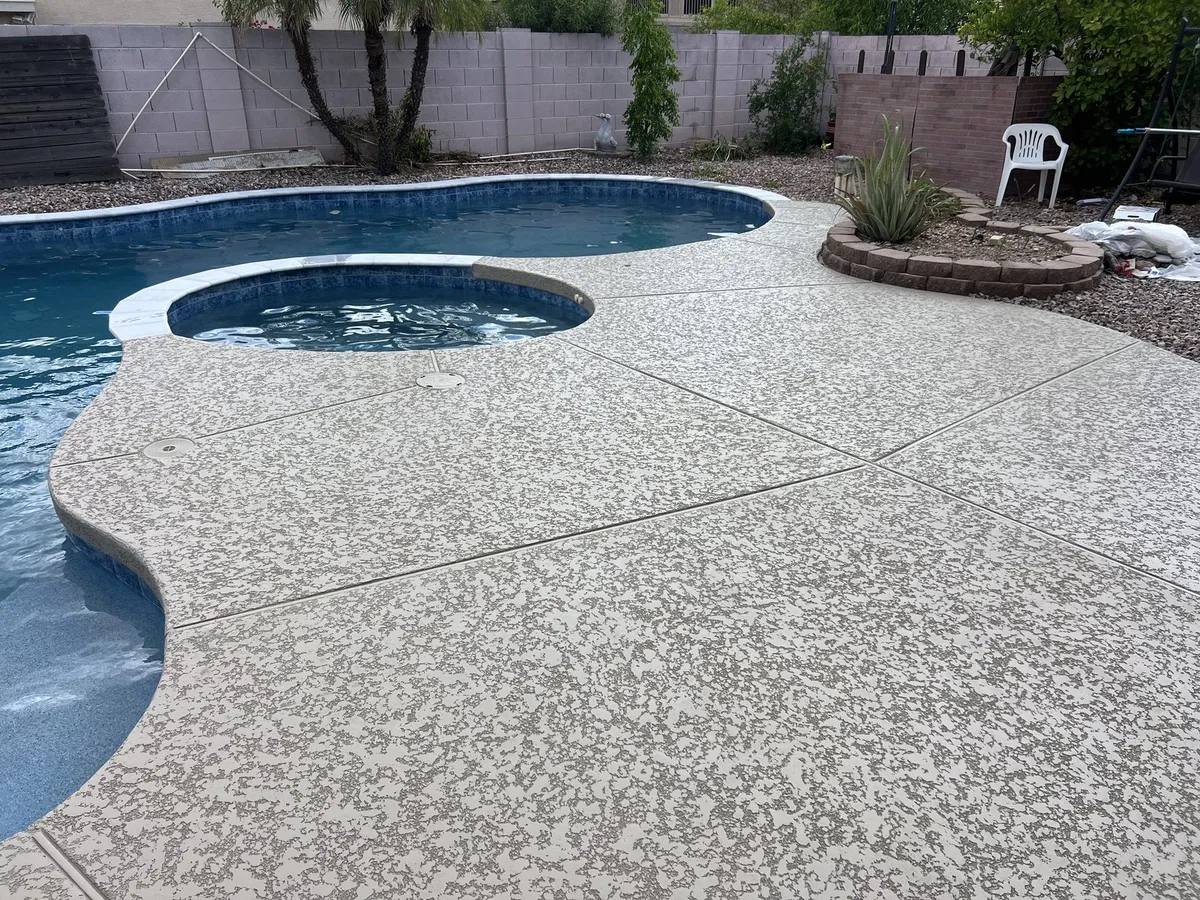
Coating systems are weather-dependent products. The material needs a clean, dry surface to bond, a workable temperature range during application, and a rain-free, dust-free window while it cures. Phoenix gives us more usable installation days than almost any market in the country — but each season changes how a project is planned.
This guide reflects how we actually schedule cool deck coating and decorative overlay projects across Phoenix, Scottsdale, Mesa, Tempe, Gilbert, and Chandler. It is a field guide from crews, not a laboratory document.
Phoenix resurfacing seasons at a glance
| Season | Conditions | Suitability | What changes |
|---|---|---|---|
| Fall (Oct–Nov) Best overall | Warm days, mild nights, low rain risk | Excellent — fastest, most predictable cures | Highest demand; book 4–6 weeks ahead |
| Spring (Mar–early May) Best value | Mild and dry before summer heat | Excellent — deck is ready before swim season | Book early; everyone wants the deck done "before summer" |
| Early summer (May–mid Jun) | Hot, but dry and predictable | Good with early starts | Crews begin at sunrise; surface temps monitored |
| Monsoon (mid Jun–Sep) | Heat plus storm and dust risk | Workable with planning | Application days chosen around forecasts; storms can pause a project |
| Winter (Dec–Feb) | Sunny days, cold nights | Good — often easiest scheduling | Cold nights slow cure; allow extra days before heavy use |
Fall: the season crews would pick
October and November are the sweet spot. Daytime temperatures sit in the range coating systems like, overnight lows stay warm enough for steady curing, and the monsoon has ended. Projects run start-to-finish without weather holds, and the deck is fully cured long before the next swim season. Once you have a date, use the fall resurfacing prep checklist so the crew can start the moment they arrive.
The tradeoff is demand. Everyone who spent the summer looking at a worn deck calls in September and October. If fall is your target, get on the schedule in late summer.
Spring: get it done before swim season
March through early May is the other prime window, and for most families it is the more satisfying one — the deck is renewed right before the months you use it most. Conditions are dry and mild, and cure times are predictable.
Spring is also when winter damage becomes obvious. If you are seeing new cracks, flaking, or hollow-sounding spots after the cooler months, our guide to the signs a deck needs resurfacing can help you judge urgency.
Summer: yes, we resurface in the heat
A Phoenix summer does not shut resurfacing down — it changes the playbook. Crews start at first light while the slab is coolest, stage the work so material is never applied to a surface that is too hot, and finish the day's application before peak afternoon temperatures.
The real summer constraint is the monsoon, which officially runs June 15 through September 30. A fresh coating needs a rain-free, dust-free cure window, so during monsoon months we watch the forecast and choose application days deliberately. A dust storm on wet coating means redoing work — no responsible contractor sprays into an incoming storm.
Summer is also when a light-colored deck earns its keep: a light coated surface can stay up to 30°F cooler than dark or bare concrete in direct sun. If your current deck is too hot to walk on barefoot, that is a material problem, not just a seasonal one — see our Arizona heat surface comparison.
Winter: the underrated window
December through February works better than most homeowners expect. Days are sunny and dry, schedules are open, and the pool is not in use — nobody misses swim time during the project. The one adjustment is cure time: cold overnight lows slow curing, so we allow extra days before furniture and heavy use go back on the deck.
Winter is also a smart time to handle repairs. If the deck has structural questions — spreading cracks, hollow spots, drainage problems — a winter repair and recoat means the surface is proven and cured well before spring.
How long the project takes, whatever the season
- Application: most residential projects take 1–2 days of on-site work.
- Light foot traffic: typically fine within 24–48 hours.
- Full cure: about 3–7 days depending on temperature and humidity — faster in warm, dry weather, slower on cold winter nights.
- Cost is seasonal-independent: pricing depends on the surface, not the month — see the full 2026 cost guide.
When to book, by target season
Want it done in fall?
Call in August or September. Fall is the busiest season and slots fill 4–6 weeks out.
Want it ready for swim season?
Book in January or February for a March–April install, so the deck is cured before the first pool day.
Deck failing right now?
Do not wait for a "better" month. Active cracking and delamination get worse and cost more to repair later.
Flexible on timing?
Ask about winter and early-summer scheduling — the calendar is more open and start dates come faster.
Before you pick a date, ask the contractor to:
- Explain how weather holds are handled and rescheduled during monsoon season.
- State the expected cure time for the season you are booking.
- Confirm how the surface will be protected from dust and debris while curing.
- Put the timeline, coating system, and warranty in writing.
Frequently asked questions
What is the best time of year to resurface a pool deck in Phoenix?
October through November and March through early May offer the most reliable conditions: mild temperatures, low rain risk, and comfortable cure windows. Resurfacing is still done year-round with schedule adjustments.
Can a pool deck be resurfaced during a Phoenix summer?
Yes. Crews start early in the morning, work the shaded areas first, and monitor surface temperatures. The main summer constraint is monsoon weather — application days are planned around storm and dust forecasts.
Does monsoon season stop pool deck resurfacing?
It does not stop it, but it changes scheduling. Fresh coatings need a rain-free and dust-free window to cure, so during monsoon season (roughly June 15 to September 30) application days are chosen around the forecast and projects may pause for storms.
How long does a resurfaced pool deck need to cure?
Most resurfacing projects take 1–2 days of application. Light foot traffic is typically fine within 24–48 hours, and full cure takes about 3–7 days depending on temperature and humidity.