Phoenix gets most of its summer rain in violent bursts — an inch or more in an hour, often carrying a wall of dust ahead of it. That combination is hard on pool decks in a specific way: the dust clogs drains, then the rain tests them. Which makes monsoon season the most honest inspection your deck gets all year.
Five things the water is telling you
- Ponding in the same spots. The slab has low points. Small ones can be floated level during a resurfacing; large ones may need grinding or grading work first.
- Water flowing toward the house. The deck slopes the wrong way — the most serious finding on this list, because stucco, door thresholds, and the foundation are now part of the drainage system.
- Water sheeting into the pool. Deck runoff carries dust, fertilizer, and coating wear straight into the water chemistry.
- Bubbles or soft spots after storms. Water is getting under the coating. This is early-stage delamination — read our warning-signs guide and act this season, not next.
- White crusty deposits (efflorescence). Moisture is moving through the concrete itself and leaving minerals behind on the way out — a slower, subtler version of the same message.
The humble deck drain, and why it clogs in July
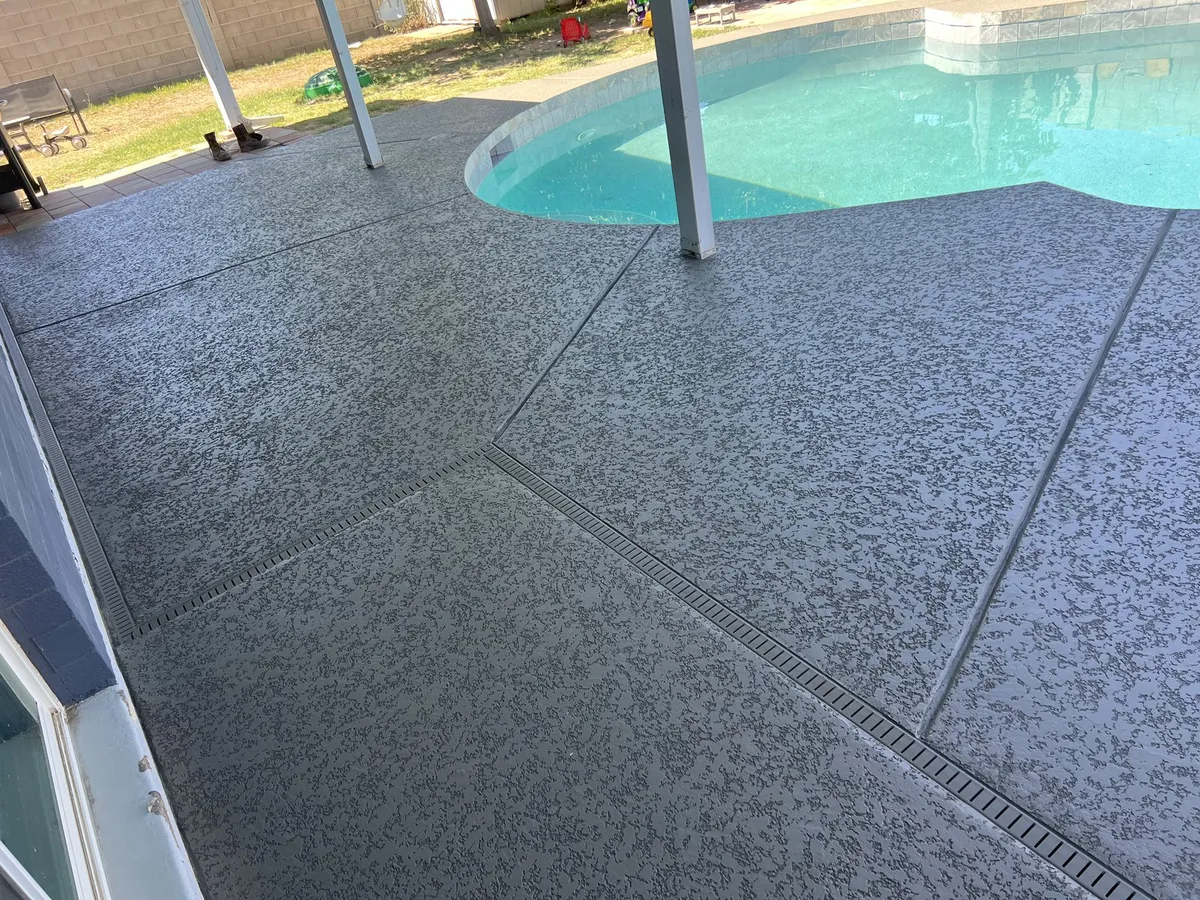
Most Valley pool decks drain through narrow channel drains set into the surface. They work until they fill with monsoon dust, palm litter, and construction sand — and a full drain fails exactly when it is needed most. The cheapest drainage maintenance in Arizona: pull the drain grates and flush the channels at the start of monsoon season, and again after any dust storm.
What standing water actually does to a coating
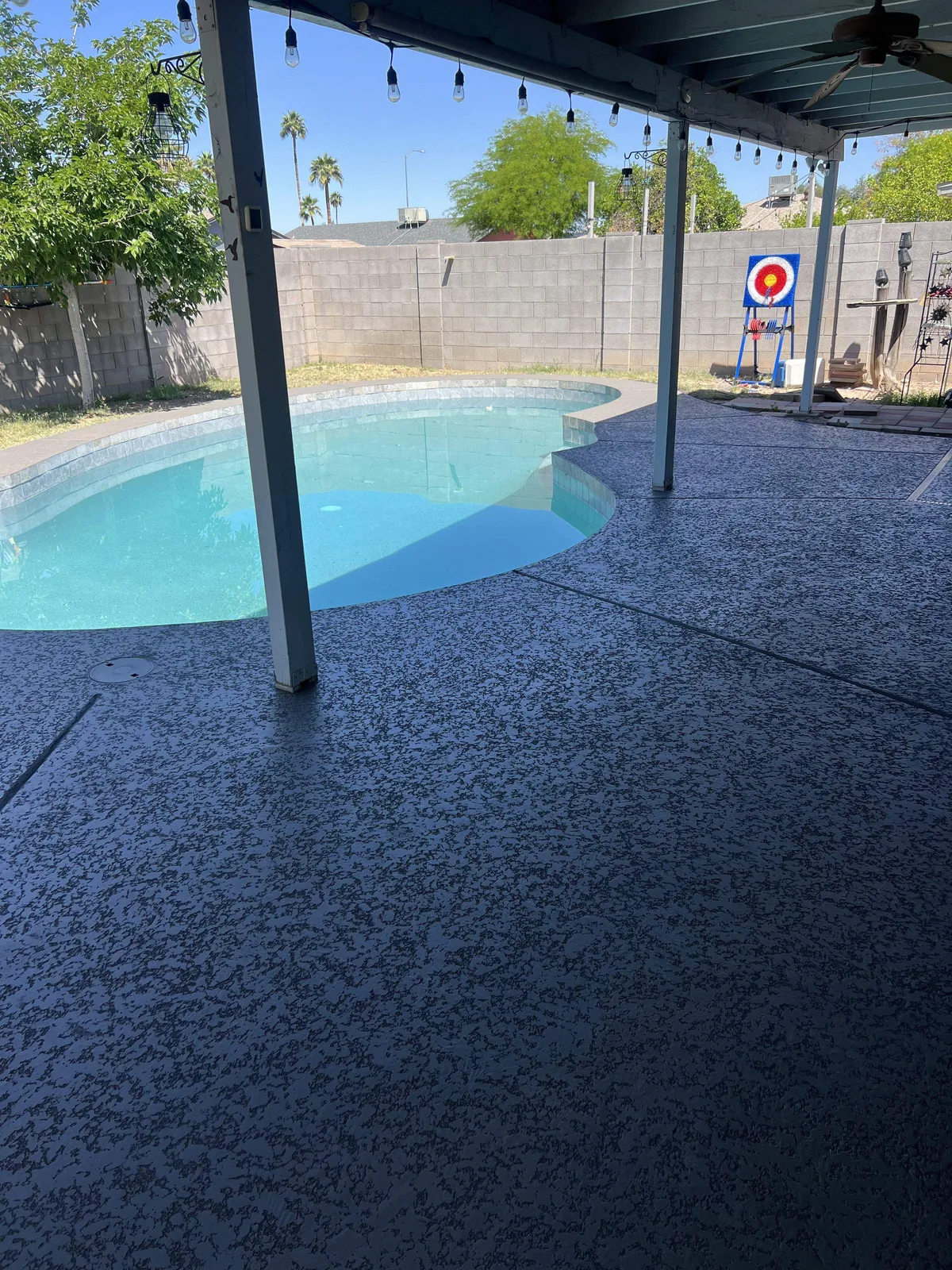
Coating systems are made for Arizona sun and pool splash — but no coating tolerates being the bottom of a pond. Repeated standing water works at the bond line between coating and concrete. First it stains, then it bubbles, then patches flake, and by the time the surface sounds hollow when tapped, you are in repair territory: the failed area has to come off before anything new can bond.
This is why we treat drainage as part of every resurfacing assessment, not a separate trade. Coating over a drainage problem just gives the water a fresh surface to destroy.
Fixing drainage, from free to built-in
- Clear the drains (free). Grates up, channels flushed, scuppers checked. Do it every June.
- Redirect downspouts and emitters (cheap). Roof and patio-cover runoff should not discharge onto the deck.
- Float low spots during resurfacing. Shallow ponding areas are leveled with repair material before the new coating goes down — the fix disappears into the finish.
- Cut in new drains during resurfacing. Where water has no path, a channel drain can be added and finished into the coating, like the projects pictured above. This is the moment to do it: the surface is already being renewed.
- Regrading (the big lever). A deck that slopes toward the house needs the slope corrected — a scope we identify honestly in the assessment rather than coat over.
Your 10-minute post-storm walk
- Any water still standing 24 hours after the storm? Photograph the spots.
- Watch (or hose-test) which way water moves: away from house and pool is correct.
- Lift a drain grate: is the channel clear or packed with dust?
- Press suspicious dark or stained areas: soft, or bubbled? Tap: hollow?
- Check door thresholds and stucco lines for water marks.
If your deck passes the monsoon test, put the photos away and enjoy the storm. If it fails, late summer is a smart time to book: drainage fixes fold into a fall resurfacing at the season crews prefer — see our scheduling guide.
Frequently asked questions
Is standing water on a pool deck after rain a problem?
Brief puddling that dries within a few hours is normal. Water standing 24+ hours, ponding in the same spots every storm, or flowing toward the house or pool indicates a grading or drainage problem worth fixing.
Can standing water damage a cool deck coating?
Yes, over time. Water that repeatedly sits on or seeps under a coating attacks the bond line, leading to bubbling, flaking, and delamination — the failures that need professional repair.
How do deck drains get fixed during resurfacing?
Resurfacing is the natural time: existing drains are cleaned and re-set, low spots floated level, and new channel drains can be cut in before coating so everything finishes as one clean surface.
Why does monsoon dust matter for pool decks?
Storms drop dust that clogs deck drains, and a clogged drain turns the next storm into a ponding test. Clearing drains before and during monsoon season is the cheapest drainage maintenance there is.