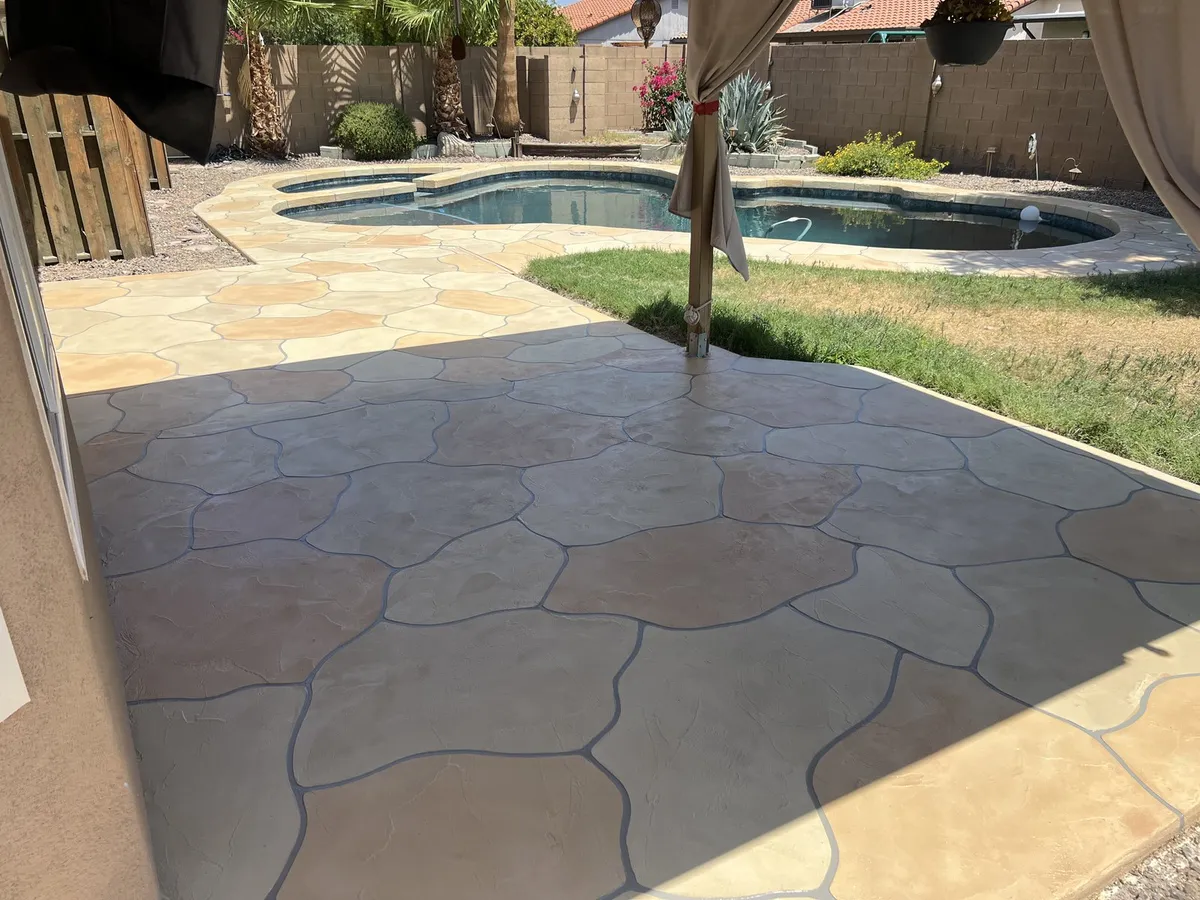
Most of the Valley yards we work in are not resort lots. They are 400–900 square feet of deck wrapped tightly around a pool, often with a covered patio eating half the floor plan. At that scale, every design decision is visible from everywhere — which means a few surface choices do most of the work.
1. Run one surface wall-to-water
The single highest-impact move: resurface the patio, walkways, and pool surround as one continuous finish. Separate materials (paint here, bare concrete there, pavers by the gate) draw borders that make each zone read smaller. One surface makes the entire yard read as a single room.
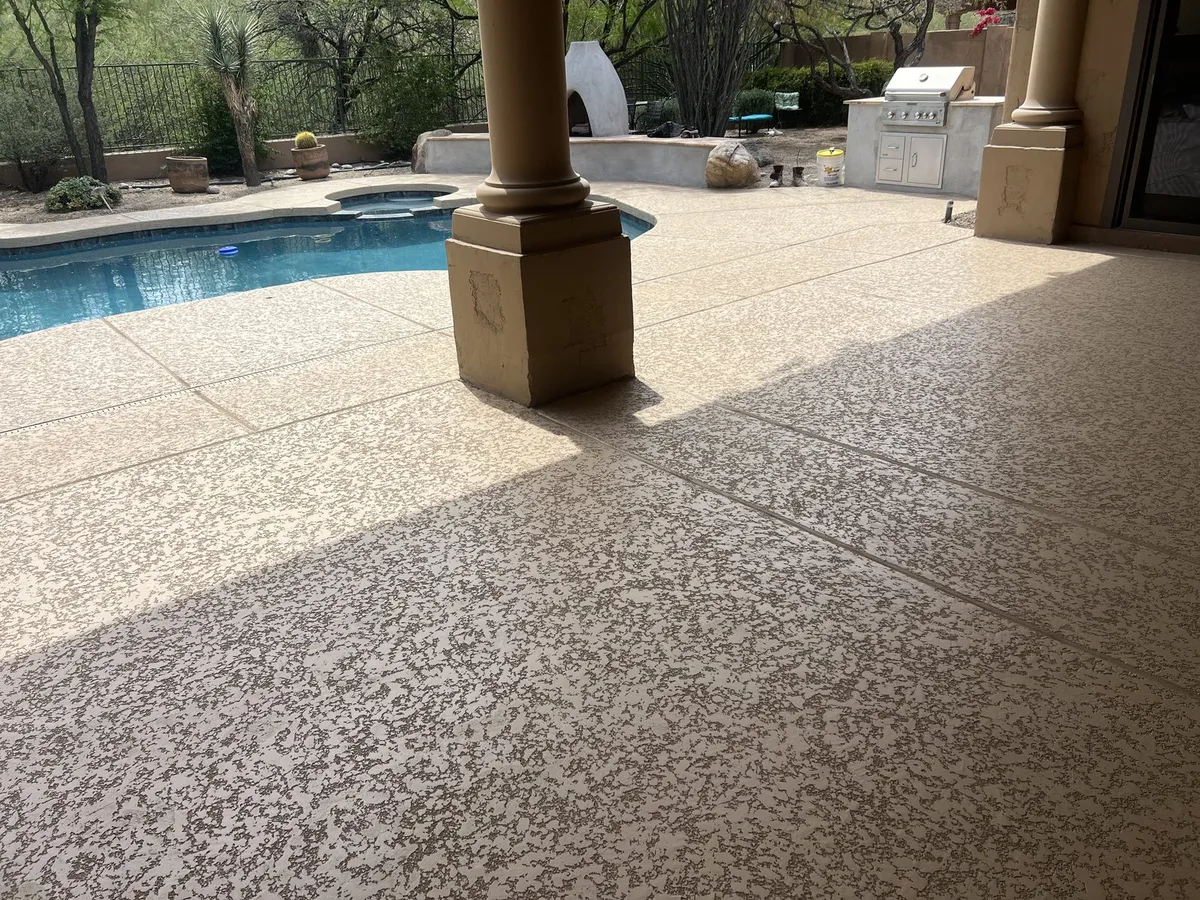
2. Go light — for space and for your feet
Light creams, sands, and soft grays do two jobs in a small yard. Visually, light surfaces reflect more light and read larger — the same reason small rooms get painted white. Physically, a light textured coating can stay up to 30°F cooler than dark or bare concrete in direct sun. In a yard where the deck is the whole usable area, a surface too hot to walk on effectively deletes your backyard from June to September. Our Arizona heat comparison ranks the options.
3. Scale the pattern to the space
Decorative does not have to mean busy. A flagstone coating finish with medium stone shapes in two or three related tones adds character a flat surface lacks — without the visual noise of an oversized, high-contrast pattern that would overwhelm 500 square feet.
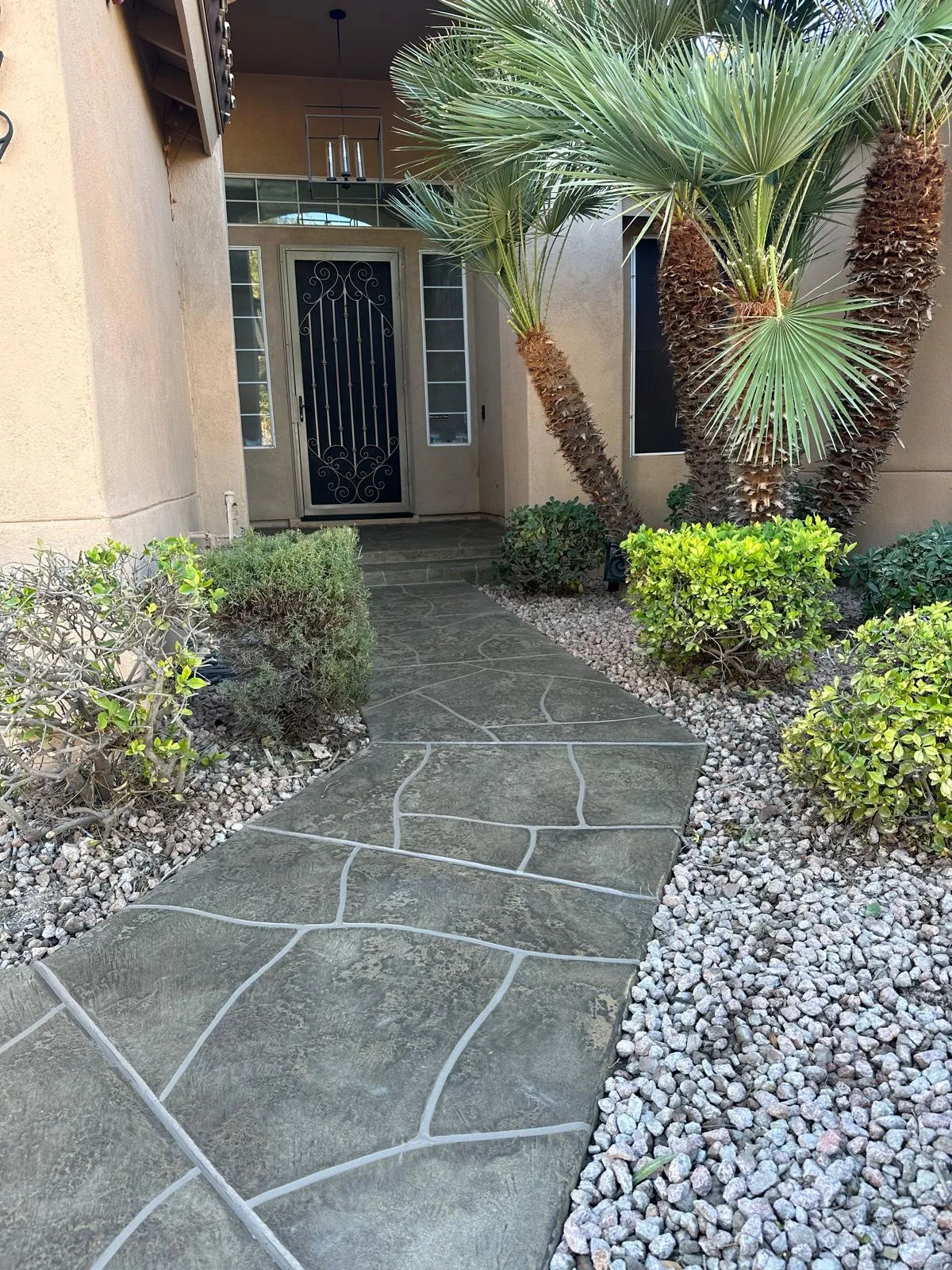
4. Use texture, not color, for contrast
A stamped overlay in a single restrained color gives a small deck depth through shadow and relief instead of through competing colors. The pattern catches morning and evening light; at midday it stays calm.
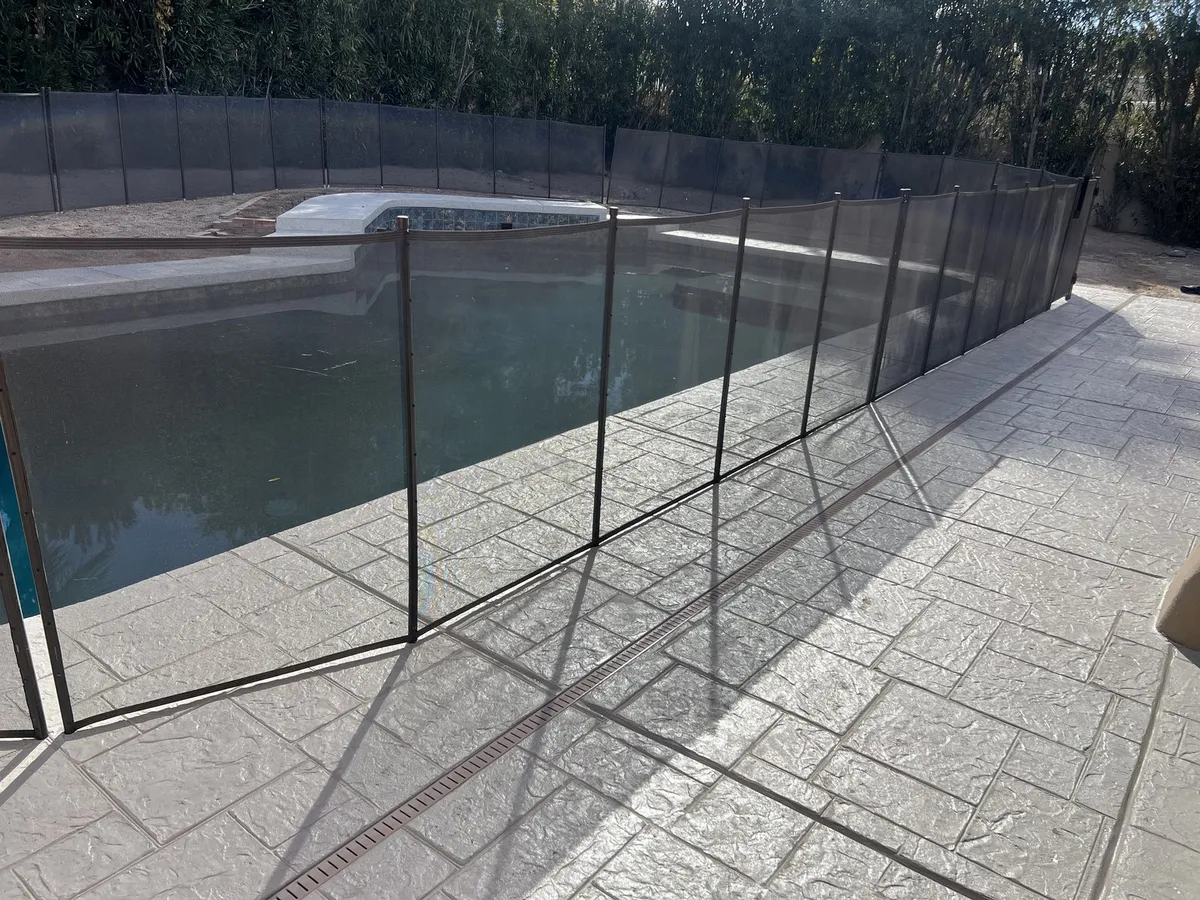
5. Zone with score lines, not materials
You still want a dining spot, a sun-lounger strip, a path. In a small yard, define them with saw-cut score lines, a subtle border band, or a tone shift within the same coating system — not with a change of material. The zones exist when you look for them and disappear when you take in the whole yard.
6. Carry the deck color into the coping
High-contrast coping draws a hard ring around a small pool and makes the water area feel like a separate object parked in the yard. Keeping deck and coping in the same family lets the eye travel across the whole space without stopping at the edge.
7. Make the deck do two jobs
In tight yards, the surface can moonlight. The same coating systems we install around pools also surface play areas and sport surfaces — a side strip can take a basketball hoop, and a durable textured finish shrugs off furniture, grills, and dogs. One surface, two uses, zero extra square feet.
Small-yard surface checklist
- One coating system across patio, paths, and pool surround.
- Light base color; save darker tones for a thin border if you want one.
- Pattern scaled to the yard — medium shapes, close tones.
- Zoning by score lines or tone shifts, not material changes.
- Coping in the same color family as the deck.
Budget note: small decks are the affordable end of resurfacing — less area, less material, less labor. The cost guide covers what moves a quote up or down; estimates are free and in writing.
Frequently asked questions
What pool deck surface makes a small backyard look bigger?
One continuous, light-colored surface from the back door to the pool edge. Breaking a small yard into different materials makes each zone read smaller; a single light coated surface reads as one large floor.
Do dark pool deck colors work in small yards?
They shrink the space visually and absorb more heat — which matters doubly when the deck is the whole usable area. Light creams, sands, and light grays are the safer choice for space and comfort.
Can a small pool deck still use a flagstone or stamped pattern?
Yes, if the pattern is scaled to the space: medium flagstone shapes or a fine stamped texture in a restrained palette. Oversized, high-contrast patterns overwhelm a compact deck.
How much does it cost to resurface a small pool deck in Phoenix?
Every project is quoted from the actual surface — size, condition, and the system you choose all affect the price. Estimates are free and in writing.